
Blockchain Prescription Drug Tracking: How It Stops Counterfeits and Saves Lives
 Feb, 12 2026
Every year, millions of people around the world take prescription drugs. But how many of those pills actually came from a legitimate source? In 2025, the World Health Organization estimated that 1 in 10 medicines in low- and middle-income countries are fake. Even in places like the U.S. and New Zealand, counterfeit painkillers, antibiotics, and cancer drugs slip through cracks in outdated tracking systems. The answer isn’t more inspections or thicker paperwork. It’s blockchain.
Why the Current System Fails
Right now, tracking a prescription drug from factory to pharmacy relies on paper logs, siloed databases, and manual checks. If a bottle of oxycodone is stolen at a warehouse in Texas, it might take weeks to flag it. By then, it could be sitting on a shelf in a pharmacy in Ohio - or worse, in someone’s medicine cabinet. Traditional systems don’t talk to each other. A pharmacy in California can’t instantly verify if a drug shipped from a distributor in Florida is real. And when a patient switches doctors or pharmacies, their prescription history gets lost in a maze of fax machines and PDFs.This isn’t just about fraud. It’s about safety. Fake drugs don’t just fail to work - they kill. In 2024, the U.S. FDA reported 17,000+ incidents of counterfeit drug seizures, many involving life-saving treatments. Meanwhile, prescription drug abuse continues to climb. Over 70,000 Americans died from opioid overdoses in 2023. The system isn’t just broken - it’s dangerous.
How Blockchain Changes Everything
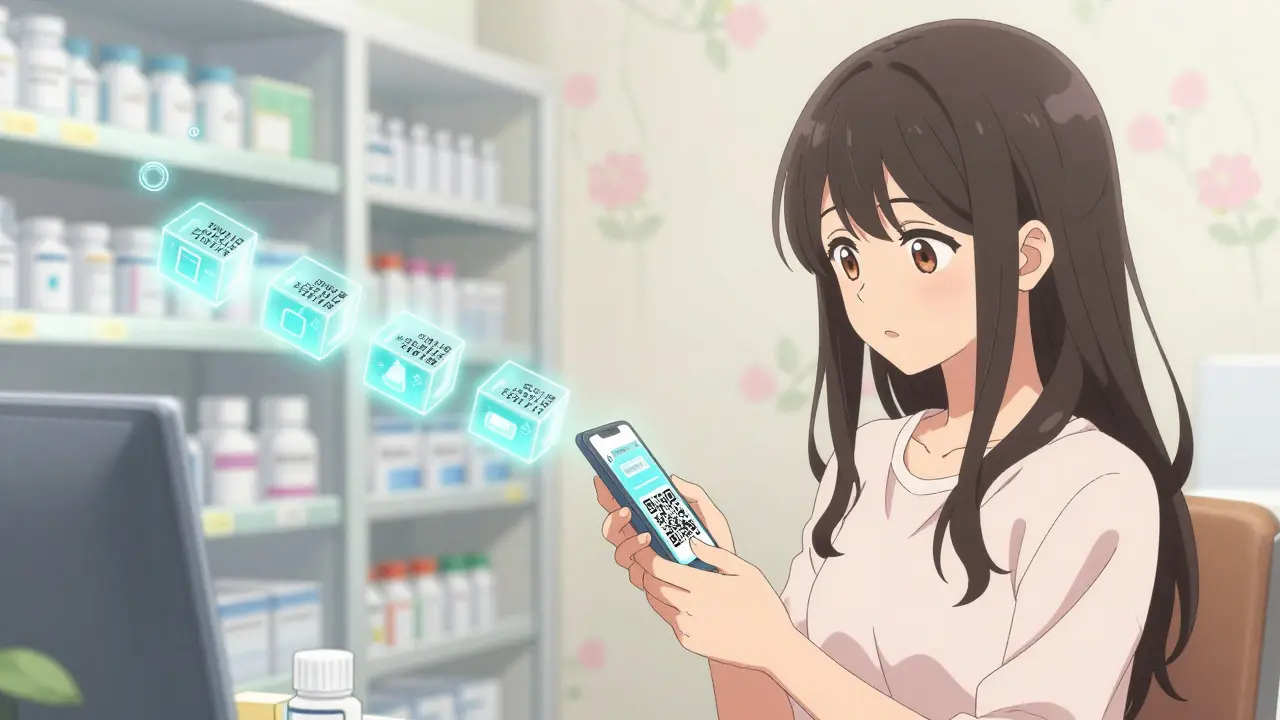
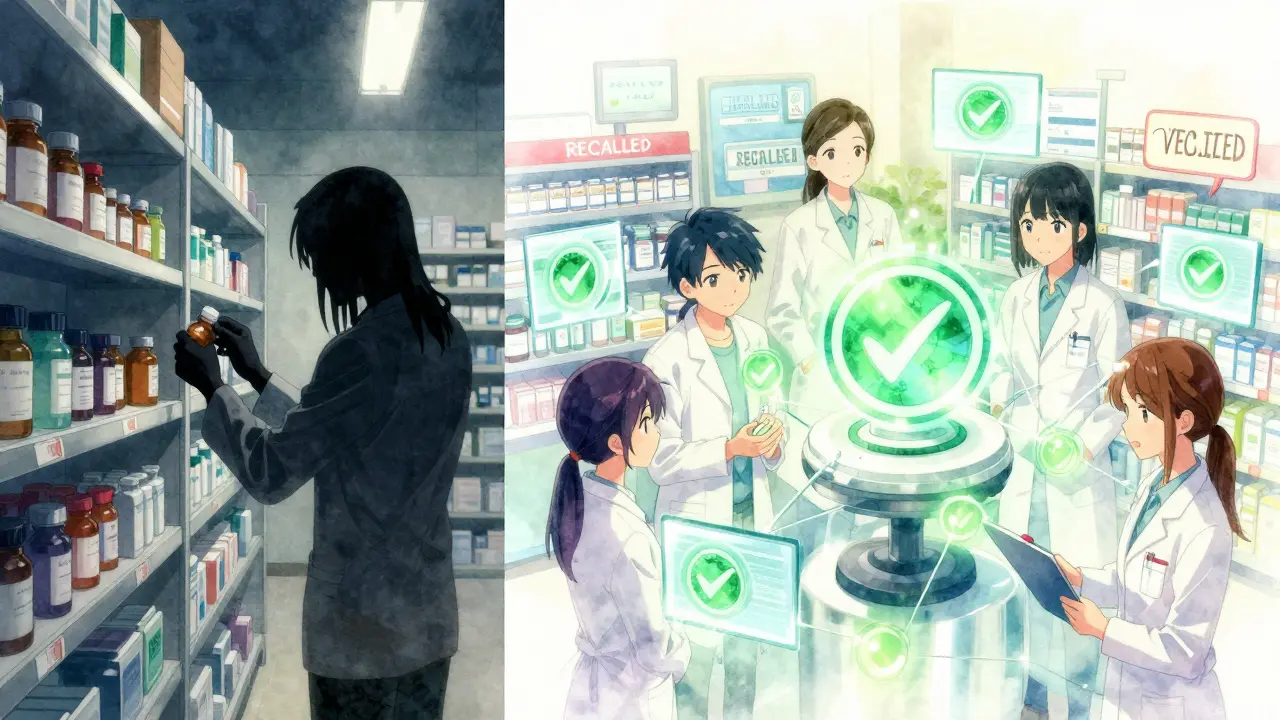
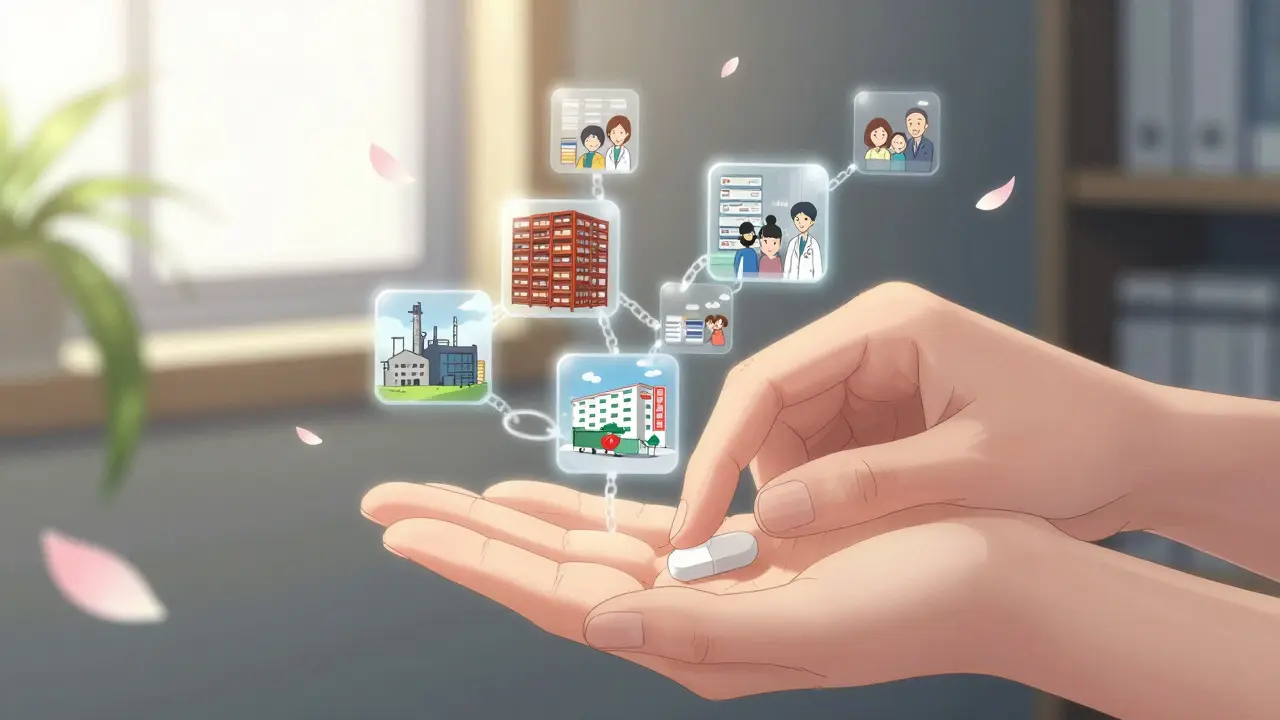
Blockchain doesn’t store files. It stores proof. Every time a drug package moves - from manufacturer to wholesaler, to distributor, to pharmacy, to patient - that movement is recorded as a digital block. Not as a file you can edit. Not as a database one company controls. But as a permanent, time-stamped, unchangeable entry that every authorized party can see.Here’s how it works in practice. Each pill bottle gets a unique 2D barcode. When it’s scanned at each step, the system checks: Is this package registered? Is it expired? Has it been flagged as stolen or recalled? If something’s wrong - say, a batch was recalled last week - the system alerts every pharmacy in real time. No waiting. No phone calls. No guesswork.
The UCLA Health team built a working system called BRUINchain as part of the FDA’s pilot program. They tested it with real prescriptions and real data. The result? A system that processes checks in 50 milliseconds. That’s faster than you can blink. It flagged expired drugs before they reached patients. It quarantined fake packages at the pharmacy counter. And it cut paperwork by 80%. This isn’t theory. It’s happening now.
Smart Contracts and Patient Control
Blockchain doesn’t just track drugs - it lets patients own their data. In the Decentralized Medication Management System (DMMS), every prescription is encrypted using the patient’s own public key. That means only the patient’s private key - which they hold - can unlock their history. No hospital. No insurer. No pharmacy can access your records without your permission.When you walk into a pharmacy to pick up your insulin, the system checks: Is this prescription valid? Is it from your doctor? Is it within your dosage limit? All in seconds. And because every transaction is stored on the blockchain, it automatically updates your state’s Prescription Drug Monitoring Program (PDMP). No more manual reporting. No more missed alerts. If a doctor prescribes you opioids, the system flags potential overuse - not because someone forgot to file a form, but because the data is live, shared, and tamper-proof.
Smart contracts automate the rest. If a drug’s expiration date passes, the system automatically blocks it from being dispensed. If a manufacturer recalls a batch, every pharmacy gets the update instantly. No delays. No loopholes.
What About Data Storage? Blockchain Isn’t a Hard Drive
You can’t store a 500-page medical record on a blockchain. It’s too slow and too expensive. That’s why smart systems combine blockchain with IPFS - the InterPlanetary File System. Think of IPFS like a decentralized Google Drive. Your prescription details, lab results, and dosage history are stored there. Only a tiny encrypted hash - a digital fingerprint - is saved on the blockchain.When you need to access your record, the pharmacy pulls the hash from the blockchain, verifies it hasn’t been altered, then fetches the full file from IPFS. No one can fake the hash. No one can change the file without breaking the link. This hybrid model gives you the security of blockchain with the storage power of modern cloud tech.
Real-World Impact: Beyond Counterfeits
This isn’t just about stopping fake pills. It’s about fixing the whole system.- Pharmacovigilance: If a patient has a bad reaction to a drug, the system can trace exactly which batch they got - and alert every other patient who received it.
- Drug shortages: Hospitals can see where inventory is low in real time and reroute shipments before a crisis hits.
- Insurance fraud: If a pharmacy bills for drugs that were never dispensed, the blockchain catches it instantly.
- Global supply chains: A drug made in India and shipped to Canada can be tracked end-to-end without relying on paper customs forms.
One study in the Journal of Advances in Medicine and Medical Research found that blockchain reduced reporting delays for adverse drug events by 92%. That’s not a small improvement. It’s life-saving.
Why Isn’t This Everywhere Yet?
Because change is hard. Even when the tech works, people don’t.First, there’s no universal standard. Every hospital, pharmacy, and manufacturer uses different barcodes, data formats, and software. Without a single rulebook, blockchain can’t connect everything.
Second, energy use. Some blockchains (like Bitcoin) burn massive power. But newer systems use proof-of-authority or proof-of-stake - methods that use less energy than a single home air conditioner. The BRUINchain system, for example, runs on standard cloud servers. It’s not a mining rig. It’s a database with trust built in.
Third, legal gray zones. Who owns the data? Can a pharmacy refuse to share if a patient has a history of addiction? Can insurers use this data to deny coverage? These aren’t technical questions - they’re policy ones. And they need lawmakers, pharmacists, patients, and tech teams to sit down and agree.
Right now, most systems are still in pilot mode. The FDA’s DSCSA program is the biggest push so far. But it’s only covering a fraction of the supply chain. The real test will come when every pharmacy, every clinic, every manufacturer joins the network.
The Future Is Already Here
In 2026, you won’t need to ask, "Is this drug real?" because the system will know - and you’ll be able to see the entire journey of your medication with a single scan.Imagine this: You pick up your blood pressure pill. You open your phone. A QR code appears. You scan it. Instantly, you see: Made in Ohio, shipped from Chicago, stored at this pharmacy since January 15, verified by the manufacturer on January 18. No expiration. No recalls. No doubt.
That’s not sci-fi. It’s what BRUINchain already does. And it’s coming to more pharmacies this year.
The old system asked: "Who do we trust?" The new one asks: "How do we prove it?" And that’s the difference between hope - and safety.
krista muzer
February 13, 2026 AT 02:11also, the ipfs + blockchain hybrid? genius. you don’t need to store my entire medical history on a chain. just the hash. that’s smart. not ‘blockchain for the sake of blockchain’ smart. actual smart.
Ekaterina Sergeevna
February 13, 2026 AT 18:59Also, ‘BRUINchain’? Cute. Sounds like a startup that got funding because the CEO’s cousin works at UCLA. Next up: NFTs for insulin pens.
monique mannino
February 15, 2026 AT 17:52thank you for writing this. not just for the tech, but for the people. 💙
Holly Perkins
February 16, 2026 AT 23:50Will Lum
February 18, 2026 AT 03:35also the patient-controlled access thing? yes. finally. no more insurance companies digging into your history because you got a pain med once.
Sanchita Nahar
February 19, 2026 AT 14:41Ben Pintilie
February 19, 2026 AT 22:38Sakshi Arora
February 21, 2026 AT 04:51bala murali
February 22, 2026 AT 01:16Desiree Foo
February 22, 2026 AT 11:58Kaz Selbie
February 23, 2026 AT 16:42Robbi Hess
February 24, 2026 AT 14:57Keturah Hudson
February 25, 2026 AT 13:04And yes, we need low-tech bridges too-SMS alerts, printed QRs, community kiosks. But the backbone? This is it.
Ace Crystal
February 26, 2026 AT 13:12Ekaterina Sergeevna
February 28, 2026 AT 11:39