
Covid Token Airdrop: Why It's a Scam and How to Spot Crypto Airdrop Fraud
 Feb, 4 2026
There's No Such Thing as a 'Covid Token Airdrop'
You might have seen ads or social media posts promising free tokens from a "Covid Token airdrop." Here's the truth: Covid Token airdropa fraudulent scheme with no legitimate existence in the cryptocurrency space. Major platforms like CoinGecko and Airdrops.io show zero results for this project. CoinGecko's 2024 annual report documented 36 major airdrops, but none involved any "Covid" related token. If you're seeing claims about this airdrop, it's almost certainly a scam.
How Legitimate Airdrops Work
Real crypto airdrops distribute free tokens to users who meet specific criteria. For example, Hyperliquid's 2025 airdrop rewarded traders who used their platform before a certain date. Monad's airdrop required users to complete testnet tasks. Legitimate projects always have clear rules published on official websites. They never ask for private keys or upfront payments. Instead, they use blockchain snapshots to determine eligibility based on holdings or activity. This process is transparent and publicly verifiable.
Why 'Covid Token' is a Red Flag
Scammers often create fake projects with names like "Covid Token" to exploit pandemic-related fears or confusion. No major exchange, wallet provider, or blockchain explorer lists this token. Searching CoinGecko, CoinMarketCap, or Airdrops.io returns no results. Even blockchain explorers like Etherscan show no smart contracts associated with "Covid Token." The absence of any official documentation, whitepaper, or community channels is a dead giveaway. Legitimate projects invest time in building these resources. Scammers skip this step entirely.

Common Scam Tactics to Watch For
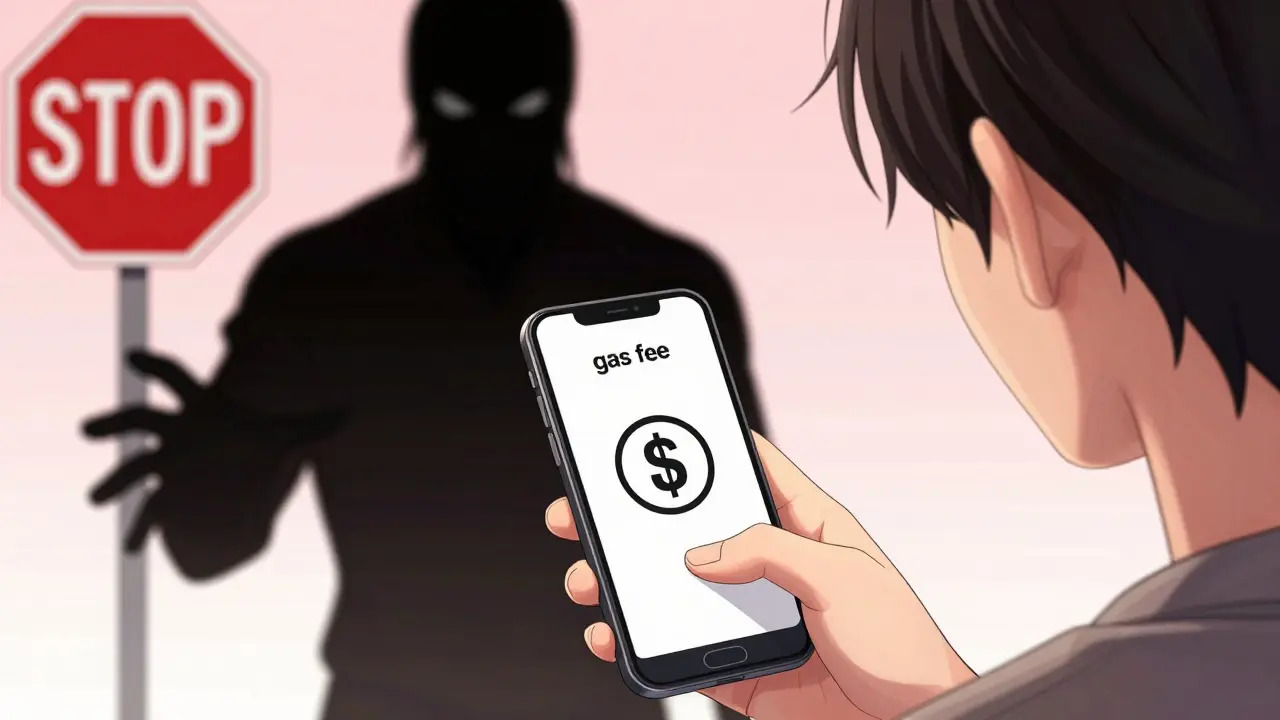
crypto airdrop scams use several tricks to trick users. They might create fake websites that look like real projects but have misspelled URLs (like "covidtoken.io" instead of "covidtoken.com"). They'll send direct messages on Twitter or Telegram claiming you've won tokens, then ask you to pay gas fees to claim them. Some will request your seed phrase to "verify" your wallet-this is always a scam. Others create urgency with phrases like "Limited time offer!" or "Only 100 spots left!" Real airdrops never work this way.
How to Verify a Legitimate Airdrop
Follow these steps to avoid scams:
- Check official sources: Go directly to the project's website (not links from social media). Look for a "Airdrop" section in their documentation.
- Use trusted tracking sites: Airdrops.io and CoinGecko list verified airdrops. If it's not there, it's likely fake.
- Verify social media: Official accounts have blue checkmarks and consistent activity. Scammers often have newly created accounts with few followers.
- Never share keys: No legitimate project will ask for your private keys or seed phrase. If they do, it's a scam.
- Check community activity: Real projects have active Discord servers or Telegram groups with hundreds of members discussing details.
Real Airdrops from 2025
Compare these legitimate projects to the fake "Covid Token" claims:
- Hyperliquid: Distributed tokens to users who traded on their platform before January 1, 2025. Required no upfront payment and used a public snapshot.
- Monad: Airdropped tokens to users who completed specific testnet tasks. Documentation was available on their GitHub and official website.
- Meteora: Rewarding users who held specific tokens in their wallets during a snapshot. All details were published on their website.
Notice the pattern? Each has clear rules, official channels, and no hidden fees. Scams lack all these elements.
What to Do If You've Been Scammed
If you shared private keys or sent funds to a fake airdrop:
- Immediately disconnect your wallet from all dApps
- Move remaining funds to a new wallet
- Report the scam to local authorities and platforms like Chainabuse
- Never pay "recovery fees"-this is a second scam
Why Scammers Target Crypto Airdrops
Airdrops are perfect for scammers because they tap into excitement about free money. People often skip verification steps when they think they're getting something for free. Scammers know this and create convincing fake websites, social media accounts, and even fake whitepapers. They also exploit real projects' names-like pretending to be "Hyperliquid" when they're not. Always double-check before participating.
Is there a real Covid Token airdrop?
No. Major platforms like CoinGecko, CoinMarketCap, and Airdrops.io show no record of any "Covid Token" project. Legitimate airdrops are always listed on these sites. The absence of any official documentation or blockchain activity confirms this is a scam.
How do scammers trick people into fake airdrops?
They create fake websites that mimic real projects, send direct messages on social media claiming you've won tokens, and ask for private keys or small payments to "claim" them. They often use urgent language like "limited time offer" to pressure victims into acting quickly without checking details.
Can I trust airdrop announcements on Twitter?
Never trust airdrop claims solely from Twitter. Scammers often create fake accounts with blue checkmarks (sometimes by buying them). Always verify through official project websites or trusted tracking platforms like CoinGecko. Legitimate projects will have multiple official channels confirming the airdrop.
What should I do if I shared my private keys?
Immediately disconnect your wallet from all dApps, move remaining funds to a new wallet, and report the incident to authorities. Never pay "recovery fees"-this is a second scam. Once private keys are shared, funds are usually lost forever.
Brendan Conway
February 6, 2026 AT 05:11hmm, there's no such thing as a covid token airdrop. scammers love using pandemic fears. always check coingecko. if it's not there, it's fake. simple as that. don't fall for it.
Taybah Jacobs
February 6, 2026 AT 12:40Real cryptocurrency airdrops are meticulously documented and verified through authoritative sources such as CoinGecko. The purported 'Covid Token' airdrop has no legitimate existence, as confirmed by all major platforms. It is imperative to exercise due diligence and never share private keys.
Sharon Lois
February 8, 2026 AT 07:08Real airdrops don't use pandemic names. This 'Covid Token' is fake. Scammers everywhere. Always check CoinGecko.
Udit Pandey
February 8, 2026 AT 17:37It is imperative to note that no legitimate cryptocurrency project offers a 'Covid Token' airdrop. Such claims are fraudulent. Always verify through CoinGecko or official channels. Never share private keys.
mahikshith reddy
February 10, 2026 AT 04:46Fake 'Covid Token'? Pathetic. Real projects don't hide behind pandemics. Check official docs or GTFO. Scammers are everywhere.
Jordan Axtell
February 10, 2026 AT 16:22Bro, you don't know how many people get scammed by fake airdrops. They always ask for private keys. It's a trap. Don't fall for it. Just trust me, I've seen it happen.
James Harris
February 11, 2026 AT 05:26Hey! This is crucial info. Always check CoinGecko for airdrops. Legit projects have clear rules. No 'Covid Token' exists. Stay safe! 🌟
aryan danial
February 12, 2026 AT 00:20Whilst it is patently obvious that no such 'Covid Token' airdrop exists, one must recognize the insidious nature of these fraudulent schemes which exploit public ignorance regarding legitimate cryptographic airdrop protocols. One should always consult authoritative platforms such as CoinGecko for verification purposes.
Brittany Novak
February 12, 2026 AT 22:30Conspiracy alert: 'Covid Token' airdrop is likely a government surveillance scheme. They want your crypto. Always check official sources. No real project would use pandemic-related names. This is a scam.
Jacque Istok
February 14, 2026 AT 13:05Ah, another 'Covid Token' scam? How original. Real airdrops have clear rules. This 'Covid Token' is fake. Check CoinGecko-zero results. Never share private keys. Duh.
Deeksha Sharma
February 15, 2026 AT 06:27Let's think about this: scammers exploit fear during crises. But there's no such thing as a Covid Token airdrop. Legit projects have clear rules. Always verify. Stay positive and informed!
Jesse Pasichnyk
February 15, 2026 AT 21:31Fake 'Covid Token' airdrop? Yeah, it's a scam. Always check CoinGecko. No legit project uses pandemic names. Don't get tricked. Stay safe, folks.
Kieren Hagan
February 17, 2026 AT 09:00It is essential to emphasize that no legitimate cryptocurrency project offers a 'Covid Token' airdrop. Such claims are fraudulent. Always verify through CoinGecko or official project channels. Never share private keys.
Shruti Sharma
February 18, 2026 AT 05:39u think there's a covid token airdrop? lol. scammers everywhere. check coingecko. no results. never share keys. its a scam. duh.
Mrs. Miller
February 18, 2026 AT 08:47Interesting how scammers use pandemic fears for fake airdrops. No such thing as 'Covid Token'-check CoinGecko. Always verify. Stay open-minded but cautious.
Paul Jardetzky
February 19, 2026 AT 03:35Hey! This is super important info. Always check CoinGecko for airdrops. Legit projects have clear rules. No 'Covid Token' exists. Stay safe! 🌈
Ajay Singh
February 19, 2026 AT 21:17No 'Covid Token' airdrop exists-it's a scam.
laura mundy
February 20, 2026 AT 06:31Fake 'Covid Token' airdrop? Obviously. Scammers prey on fear. Always verify. No results on CoinGecko. Don't trust social media. Simple.
Mendy H
February 22, 2026 AT 01:41Ah, the 'Covid Token' myth. How predictable. Legitimate airdrops are well-documented. This is a scam. No further analysis needed.
sabeer ibrahim
February 22, 2026 AT 04:56Scams like 'Covid Token' airdrop exploit pandemic fears. No such project exists on CoinGecko. Always verify. Never share private keys. It's a scam.