
Decentralized Identity Solutions: Taking Control of Your Digital Self
 Apr, 15 2026
How the Tech Actually Works
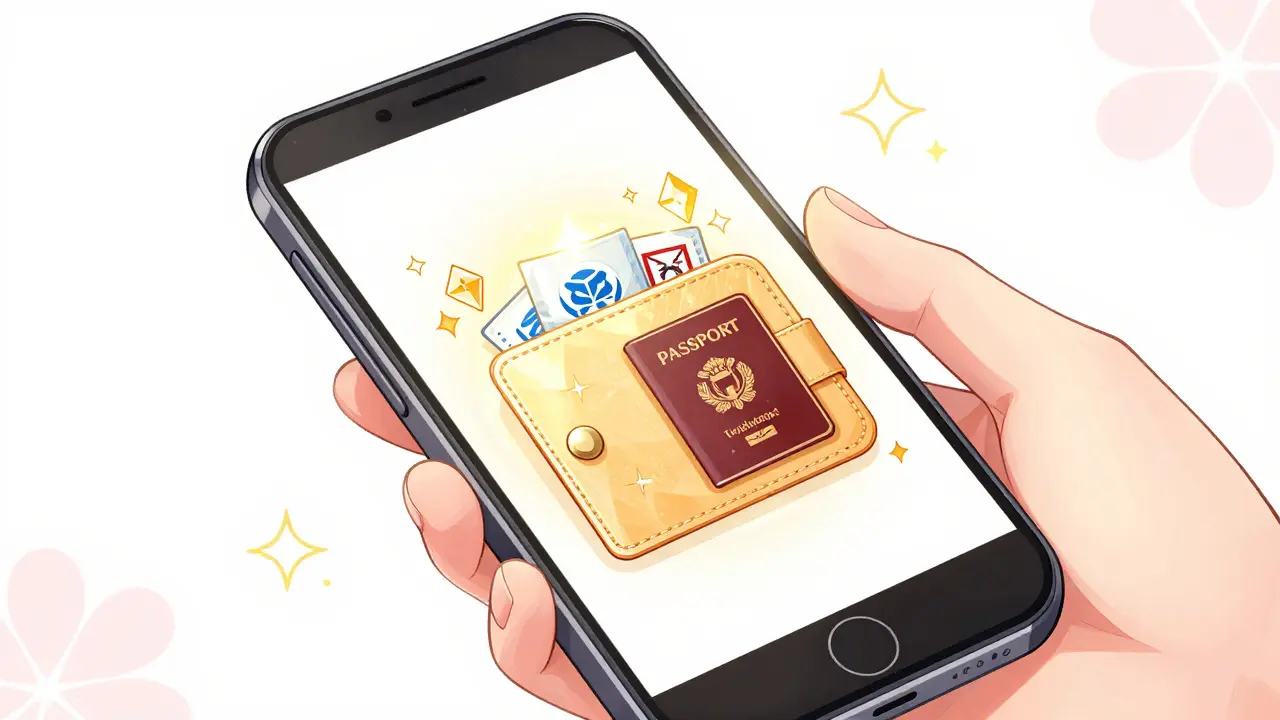
To understand how this works, you have to look at the three pillars that hold up the system. First, there are Decentralized Identifiers (or DIDs), which are essentially unique alphanumeric strings. Unlike an email address, a DID doesn't contain your personal info; it's just a pointer that you control. Next, we have Verifiable Credentials (VCs). Think of these as digital versions of your driver's license or university degree. They are cryptographically signed by an issuer, meaning they are tamper-proof. If a company tries to change the date on your digital degree, the cryptographic signature breaks, and the credential becomes invalid. Finally, you need a place to put these: Digital Wallets. These aren't for money, but for identity. Tools like Microsoft Entra Verified ID allow you to store these VCs on your phone. When a service asks for proof of age, you don't send a photo of your ID; your wallet sends a cryptographic proof that you are over 18, without revealing your exact birthdate. This is called selective disclosure, and it's a game-changer for privacy.The Big Shift: Centralized vs. Decentralized
Traditional identity management (IAM) is like keeping all your valuables in one giant bank vault. If a thief finds the master key, they get everything. In contrast, decentralized identity is like giving every person their own small, indestructible safe.| Feature | Centralized Identity (Traditional) | Decentralized Identity (DCI) |
|---|---|---|
| Data Storage | Company-controlled databases | User's personal device (Wallet) |
| Control | Service Provider | Individual User |
| Security Risk | Massive data breaches (Honey pots) | Endpoint/Device security |
| Verification Speed | Dependent on server API calls | Rapid (200-500ms for basic checks) |
| User Onboarding | Fast (Create account in seconds) | Slower (Initial wallet setup required) |
Where This is Actually Being Used
This isn't just theoretical. The European Union is already ahead of the curve with the EUDI Wallet. They are working to allow 447 million citizens to verify their identity across different member states without needing a centralized database for every single transaction. In the business world, the impact is felt in KYC (Know Your Customer) processes. Normally, if you open a bank account, you spend days sending PDFs of your utility bills and passports. Fintech startups using DCI have seen these processes shrink from five days down to just 47 minutes. Why? Because the bank isn't "checking" the document; they are verifying a digital signature from a trusted issuer that has already happened. Healthcare is another huge area. Instead of every clinic having a copy of your medical history, you hold your records in your wallet. You grant a doctor temporary access to a specific set of records for a specific amount of time. When the appointment is over, you revoke the access.The Role of Blockchain and DLT
Many people confuse DCI with blockchain, but Blockchain is simply the trust layer. It doesn't store your name or address-that would be a privacy nightmare and a violation of GDPR. Instead, it stores the "public key" of the issuer. When you present a credential, the verifier checks the blockchain to see if the key used to sign that credential belongs to a trusted organization (like a government or university). Common platforms used for this include Hyperledger Indy, Ethereum, and the Sovrin Network. This ensures that no one can fake a credential because they can't fake the record on the distributed ledger.
The Hard Truths: Challenges and Pitfalls
If this is so great, why isn't everyone using it? Because the user experience is currently clunky. Most of us are used to clicking "Forgot Password." In a truly decentralized system, there is no "company" to reset your password because the company doesn't have it. If you lose your private keys, you could be locked out of your own identity. There is also a fragmentation problem. As of late 2024, there are over 50 different "DID methods." It's a bit like having 50 different types of electrical plugs; they all work, but they don't all fit into the same socket. Until universal interoperability is solved, switching between different wallet providers can be a headache. For developers, the learning curve is steep. It usually takes 80 to 120 hours of specialized training to get comfortable with the W3C standards and cryptographic key management. It's not as simple as plugging in a standard API; it requires a total rethink of how data flows between users and services.What's Next for Digital Identity?
We are moving toward a hybrid model. The OpenID for Verifiable Credential Issuance (OID4VCI) standard, coming in 2025, will bridge the gap. It allows the traditional login flows we already know (like OAuth) to work with these new verifiable credentials. By 2027, experts predict that 60% of new identity systems will use some form of decentralized tech. We'll likely see AI-driven fraud detection integrated directly into our wallets, helping to spot anomalies in how our identities are being requested. While the transition will be slow, the momentum is there. The drive for privacy and the cost of massive data breaches are pushing us toward a future where we finally own our data again.Do decentralized identity solutions store my personal data on the blockchain?
No. Storing personal data on a blockchain would be a major privacy risk because blockchains are immutable. Instead, your personal data stays in your digital wallet on your device. The blockchain only stores the public keys and identifiers needed to verify that the data in your wallet was signed by a trusted source.
What happens if I lose my phone or my digital wallet?
This is currently the biggest challenge in DCI. Depending on the implementation, you may need a backup seed phrase, a recovery key stored in a safe place, or you might have to undergo an in-person verification process with the original issuer to re-issue your credentials to a new device.
Is decentralized identity compliant with GDPR?
Generally, yes. In fact, DCI is designed to support GDPR principles like data minimization and the "right to be forgotten" because the user controls the data. However, some privacy advocates warn that if issuers embed hidden tracking identifiers in credentials, it could potentially conflict with privacy laws.
How is a Verifiable Credential different from a digital PDF of my ID?
A PDF can be easily edited with a basic image editor. A Verifiable Credential is cryptographically signed. It contains a digital signature that the verifier can check against a blockchain or ledger. If a single character in a VC is changed, the signature becomes invalid, making it virtually impossible to forge.
Which companies are currently leading the DCI market?
Microsoft is currently a leader in the enterprise space with Entra Verified ID. Other significant players include IBM, 1Kosmos, and specialized firms like Dock.io and Evernym.
Trudy Morse
April 15, 2026 AT 11:52Owning your identity is basically reclaiming your digital soul. It's a shift from being a product to being a person again.
Shantal Sanjur
April 15, 2026 AT 22:47Oh sure, just move the "honey pot" from a corporate server to my phone. I'm sure the government won't find a way to mandate a backdoor into these "secure" wallets. It's just another layer of surveillance dressed up as freedom. Classic.
Luke George
April 17, 2026 AT 20:20The whole thing smells like a setup for a global credit system. They tell us we own the data, but the "trusted issuers" are still the ones deciding who gets a credential. It's just a different flavor of control.
Michael Harms
April 18, 2026 AT 13:05I think we should stay positive about the potential here! It's a big step toward inclusivity if people in developing nations can finally prove their credentials without a formal government ID from a corrupt regime.
Jeff Barlett
April 19, 2026 AT 19:20Wait, so if I lose my phone, I'm just... gone? Poof? My identity is deleted? That sounds like a complete nightmare for anyone who isn't a tech genius. I'll stick to my passwords, thanks.
Robert Preston
April 20, 2026 AT 05:47Actually, the key recovery problem is being solved with social recovery and multi-sig setups. You can designate trusted friends or a professional service to help you regain access without them ever seeing your private keys. It's a bit more complex to set up, but it solves the "single point of failure" issue that makes people nervous about self-custody.
Mark Pfeifer
April 22, 2026 AT 00:35The selective disclosure part is the real winner. Not having to show my full address just to prove I live in a certain zip code is a massive win for basic privacy.
Thomas Jewett
April 24, 2026 AT 00:18This is exactly why we need to keep our tech homegrown in the US and not let these international standards dictate how we handle our citizens identity!! its basic national security and these people are just trying to push a globalist agenda under the guise of convenience... honestly its embarrassing how many people fall for this stuff without thinking about the long term implicatons for our sovereignty!
Anna Grealis
April 25, 2026 AT 03:18just another way for them to track us. the blockchain is forever. once your DID is linked to your real name by one "trusted" entity, you are tagged for life. no matter how many wallets you use, the pattern is there.
Chintu Parikh
April 27, 2026 AT 02:40It is truly inspiring to witness the evolution of digital trust frameworks. The reduction of KYC onboarding from days to minutes is a monumental achievement for the fintech sector and will undoubtedly foster greater financial inclusion globally.
I believe that through collaborative efforts and the adoption of W3C standards, we can create a seamless ecosystem that empowers the individual while maintaining the highest levels of security and integrity. Let us embrace this transition with optimism and a commitment to mutual growth!
Sean Douglas
April 27, 2026 AT 08:14The sheer audacity of calling a 120-hour learning curve "steep" is a joke. For a developer, that's a long weekend and a few cups of coffee. The real tragedy here is the absolute chaos of having 50 different DID methods. It's an architectural disaster, a fragmented wasteland of competing egos masquerading as "innovation." I can't even imagine the migraine-inducing process of trying to make these things talk to each other without a universal bridge.
Alex Long
April 28, 2026 AT 01:38Too slow. Not happening.
Gaurav Undirwade
April 29, 2026 AT 03:03One must realize that the lack of a central authority is not merely a technical shift, but a moral imperative. It is a failure of character to continue trusting corporations with our most intimate data when the tools for liberation are already present. Those who resist this change are simply clinging to a fragile sense of security that has already been proven illusory.
Keri Pommerenk
April 29, 2026 AT 15:47sounds like a good way to keep things organized. i like the idea of not having 50 passwords
Karen Mogollon Gutierrez
May 1, 2026 AT 14:24I find it utterly scandalous that we are expected to manage our own cryptographic keys in an era where basic digital literacy is still a struggle for many! The potential for a catastrophic loss of identity is simply too high to ignore, and the lack of a robust, centralized safety net is nothing short of an institutional failure!
Adam Mann
May 3, 2026 AT 06:45It's really cool how this can help people who don't have a steady home address or a way to get official papers easily. By letting people carry their credentials on a phone, we're making the world a bit more open and welcoming for everyone, regardless of where they come from or what their situation is. I'm just really excited to see how this helps the marginalized communities get a fair shot at things like banking and healthcare without all the red tape that usually holds them back.
Vicky Duffala
May 4, 2026 AT 23:14This is the digital equivalent of a Renaissance! 🌟 We're moving from the dark ages of data silos into an era of enlightenment where the individual is the center of their own universe. I can't wait to see how this changes our social contracts. Imagine the freedom! :)
Gillian Kent
May 6, 2026 AT 07:04its laely sounds like a good idea but i wonder if the apps will actually work on older phones. some peeple cant afford the newest gear so we gotta make sure evryone can use it
nathan jones
May 7, 2026 AT 17:41Pretty neat tech. Definitely beats filling out the same form ten times at the doctor's office.
Kevin Lư
May 8, 2026 AT 06:31I'm all for it, but let's be real, most people are too lazy to set up a wallet. They'll just keep using "Login with Google" because it's easy, even if it's wrong. We're basically fighting against human nature here.
Mike Kempenich
May 9, 2026 AT 03:22We'll get there. It takes time for the average person to trust a new system, but once the benefits outweigh the effort of setup, the adoption will be exponential. I'm betting on the 2027 prediction.