
Food Traceability Using NFTs: How Digital Tokens Are Rewriting Supply Chains
 Jun, 8 2026
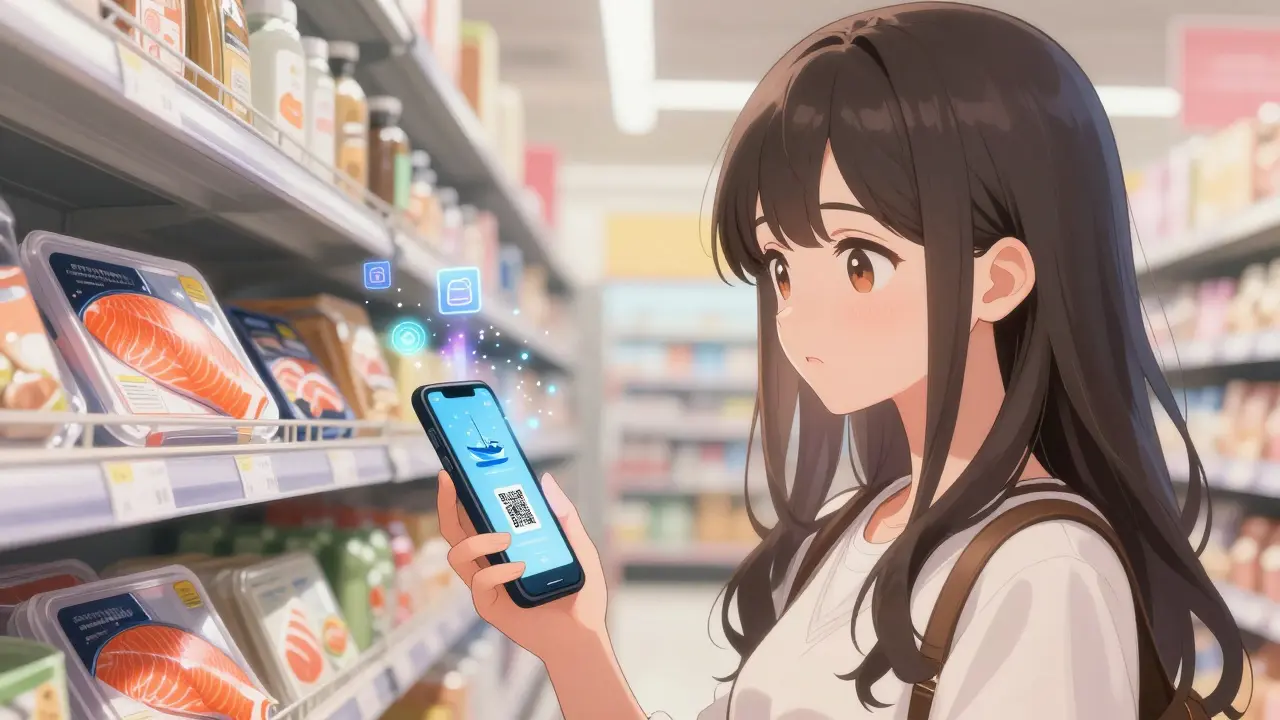
Imagine buying a salmon fillet at the grocery store. You scan a QR code with your phone, and instead of just seeing "Product of Norway," you see the exact fishing vessel that caught it, the GPS coordinates where it was pulled from the water, the temperature logs during shipping, and even the name of the processor who packaged it. This isn't science fiction anymore. It is happening right now through a technology most people associate with expensive digital art: Non-Fungible Tokens, or NFTs.
We usually hear about NFTs in the context of crypto bros buying JPEGs for millions. But behind the hype lies a powerful tool for supply chains. By linking physical food items to unique digital tokens on a blockchain, companies can create an unchangeable history for every single product. This solves one of the biggest headaches in the food industry: trust. With food fraud costing the global industry an estimated $40 billion annually, the need for better tracking has never been higher.
The Problem With Traditional Tracking
To understand why NFTs matter, we first have to look at how broken the current system is. For decades, the food industry relied on barcodes and batch numbers. If a shipment of mangoes gets contaminated, retailers like Walmart used to take seven days or more to trace back exactly which farm supplied those specific boxes. Seven days is an eternity when people are getting sick. During that time, contaminated food stays on shelves, recalls are messy, and public trust erodes.
Traditional barcodes are also limited. They tell you what a product is, but they don't prove its history. A label saying "Organic" means nothing if you can't verify it. According to the European Commission, fraud rates in organic produce hit 12%. In the seafood world, Oceana found that 30% of fish sold in the US were mislabeled. You might think you're eating sustainable wild-caught tuna, but you're actually getting farmed catfish. Standard databases can be hacked or edited. Once data is entered into a private server, anyone with admin access can change it. That is where blockchain comes in.
How NFTs Work in Food Supply Chains
An NFT is a unique digital certificate stored on a blockchain. Unlike Bitcoin, which is fungible (one Bitcoin is equal to another), an NFT is non-fungible. Each token is distinct. When applied to food, each individual item-or sometimes a small batch-gets its own NFT.
Here is the process in plain English:
- Creation: At the source, such as a farm or fishing boat, an NFT is minted. This token contains initial data like harvest date, location, and farmer ID.
- Integration: The NFT is linked to a physical tag, usually a QR code, RFID chip, or NFC sticker attached to the packaging.
- Updates: As the food moves through the supply chain-to processors, distributors, and retailers-each step adds new data to the token. Because it's on a blockchain, this data cannot be deleted or altered by previous steps.
- Verification: When you buy the product, you scan the code. Your phone reads the NFT and displays the full, verified journey of that specific item.
This creates a "digital twin" of the physical food. Companies like Nestlé have started using similar systems for coffee beans, allowing consumers to see exactly which cooperative grew their morning brew. The technology relies on platforms like Ethereum or Hyperledger Fabric, using standards like ERC-721 to ensure each token is unique and secure.
Why This Matters: Speed and Safety
The biggest benefit of NFT-based traceability is speed. Walmart ran a famous pilot program using blockchain to track mangoes. Before the tech, tracing the origin took 6.5 days. After implementing the system, it took 2.2 seconds. While that early test didn't use NFTs for individual items, newer pilots in 2024 and 2025 show even faster results. Walmart’s October 2024 pilot using NFTs for individual mango tracking reportedly reduced recall identification time to 0.8 seconds.
Think about the impact of that. If E. coli is detected in spinach, a retailer can instantly identify exactly which farms produced the affected batches. They can pull only those specific items off the shelf. This prevents unnecessary waste of safe food and protects consumers much faster. Wipro projects that this item-level tracking could reduce the scope of recalls by up to 95%, saving billions in lost inventory and brand damage.
Who Wins? High-Value Foods First
Not every food item needs an NFT. The cost of implementation is high, ranging from $50,000 to $500,000 for enterprise deployments, according to PrimaFelicitas' 2024 analysis. Therefore, this technology is currently focused on high-value, high-risk products.
- Premium Seafood: With high fraud rates, luxury fish like bluefin tuna or lobster benefit greatly from provenance proof.
- Organic Produce: Consumers pay a premium for organic labels. NFTs provide the proof that the food was grown without synthetic pesticides.
- Specialty Coffee and Chocolate: Brands like Nespresso and various chocolate makers use these systems to guarantee fair trade practices and ethical sourcing.
- Meat Products: Carrefour uses blockchain to track pork and chicken, showing slaughter dates and processing facilities to combat avian flu concerns.
For low-margin commodities like wheat or corn, the cost doesn't make sense yet. The market for blockchain food traceability reached $1.84 billion in 2024, but NFT-specific applications only represent about 8.3% of that total. Adoption is growing, but it is selective.
| Feature | Traditional Barcodes | Standard Blockchain | NFT-Based Traceability |
|---|---|---|---|
| Granularity | Batch Level | Batch or Pallet Level | Individual Item Level |
| Data Immutability | Low (Editable) | High | High |
| Recall Precision | Low (Wide Swings) | Medium | Very High (Targeted) |
| Implementation Cost | Low | Medium | High ($50k-$500k+) |
| Consumer Engagement | Passive | Active (Scan to Learn) | Interactive (Ownership/History) |
The Hurdles: Why Isn't Everyone Doing It?
If this technology is so great, why isn't it on every apple in the supermarket? There are three main roadblocks.
1. Interoperability Nightmares
Different companies use different blockchain platforms. IBM uses one, Walmart uses another, and startups like Ripe.io use others. Dr. Michael Rodriguez from UC Berkeley warned that without standardized protocols, these systems create "data silos." If a farmer uses Platform A and the retailer uses Platform B, the data doesn't flow smoothly. The Food and Agriculture Organization (FAO) launched a standardization initiative in March 2025 to fix this, but it takes time for giants to agree on rules.
2. Consumer Friction
Only 22% of consumers regularly scan traceability codes, according to a 2023 survey by Food Inspiration. Many people find the process confusing. Trustpilot reviews for early adopters often cite "confusing scanning processes" as a pain point. If the app crashes or the info is hard to read, customers get frustrated. The technology needs to be seamless, not a chore.
3. Regulatory Gray Areas
Current laws in the EU and US do not fully recognize digital NFT verification as a substitute for physical labeling. Simmons & Simmons noted in 2024 that compliance uncertainties remain. However, the EU's Digital Product Passport initiative, mandated for certain categories by 2027, will likely force more adoption. This regulation requires detailed digital records for products, making NFTs a logical solution.
What Comes Next?
We are still in the early stages. Gartner placed blockchain-enabled NFT traceability at the "Peak of Inflated Expectations" in 2024, predicting mainstream adoption in 5 to 10 years. But the momentum is building. IBM announced integration of NFT capabilities into its Food Trust platform in Q1 2025. Major players are testing the waters because the pressure for transparency is coming from both regulators and shoppers.
By 2030, Gartner forecasts that 65% of premium food products will use NFT traceability. This won't replace traditional methods overnight, but it will become the gold standard for anything where provenance matters. For farmers, it offers proof of quality. For retailers, it reduces risk. And for us, it finally gives us the truth about what we eat.
Are NFTs in food supply chains environmentally friendly?
Early concerns existed due to Ethereum's energy consumption before "The Merge" in 2022. Today, most supply chain blockchains use Proof-of-Stake or permissioned ledgers like Hyperledger Fabric, which consume significantly less energy than traditional mining. The environmental impact is negligible compared to the waste reduction achieved by precise recalls.
Can I buy food NFTs as investments?
No. These NFTs are utility tokens, not financial assets. They serve as digital certificates of authenticity and ownership history for physical goods. You cannot sell them for profit; their value lies in the trust and information they provide about the food product.
Which companies are leading in NFT food traceability?
Major players include Walmart (tracking produce), Nestlé (coffee), and Carrefour (meat). Technology providers like IBM Food Trust, TE-FOOD, and startups like Ripe.io are building the infrastructure. However, full-scale NFT implementation is still largely in the pilot phase among these leaders.
How does this prevent food fraud?
Fraudsters rely on opaque supply chains. NFTs create an immutable record from farm to fork. If a seller claims fish is wild-caught, the NFT contains data from the fishing vessel and processing plant that cannot be altered. This transparency makes it extremely difficult to pass off cheap substitutes as premium products.
Will this increase the price of food?
Initially, yes, for premium products. Implementation costs are high, and companies may pass some of this onto consumers. However, as the technology scales and becomes standard, costs should decrease. Many consumers are already willing to pay a slight premium for verified organic or ethically sourced goods.
Sylvia Mossman
June 8, 2026 AT 20:42Oh please, spare me the tech-bro fairy tale. This is just another way for corporations to charge us more for the privilege of knowing where our food came from. You think scanning a QR code makes your salmon any less processed or sustainable? It doesn't. It just adds a layer of digital bureaucracy that costs money and creates e-waste. I'd rather trust my nose than some blockchain entry minted by a middleman who cares about stock prices, not my health.
JEVON HALL
June 10, 2026 AT 10:51hey sylvia i get why you are skeptical but have you actually tried scanning one of these at nestle or carrefour yet 🤔 it is pretty cool how the data is immutable on the chain. once that fish leaves the boat nobody can change the temp logs. that is huge for safety. not saying its perfect but it beats batch recalls where they throw away good food too 😅
Sylvia Mossman
June 11, 2026 AT 22:43Immutable garbage is still garbage if the initial input was wrong. Garbage in, garbage out. If the fisherman lies about the location when he mints the token, the blockchain just preserves that lie forever. And don't give me that 'trust the sensor' line. Sensors break. People hack inputs. This isn't magic, Jevon. It's marketing dressed up as innovation.
Alexis Abster
June 13, 2026 AT 16:21I know it feels like hype right now, but imagine the peace of mind for parents buying organic baby food! No more guessing games. The transparency could really rebuild trust between us and the brands we support. It’s exciting to think about a future where every bite tells a story of care and precision. Let’s keep an open mind about the potential for good here!
Matthew Malone
June 15, 2026 AT 04:40This is exactly the kind of globalist overreach we need to stop. Why should American farmers submit to EU digital passports? We have our own systems. Our own standards. Bringing in foreign regulatory frameworks via blockchain is a Trojan horse for controlling our agriculture sector. Keep your NFTs in Europe where they belong. America feeds itself just fine without digital hand-holding.
Meg Gran
June 15, 2026 AT 09:56oh great another thing to scan while im trying to buy milk before work. who has time for this?? plus half the apps crash anyway so its just gonna be annoying. also why do i need to download a new app just to check if my apple is real?? sounds like a nightmare waiting to happen lol
Dr Lynea LaVoy
June 16, 2026 AT 05:53Meg, I understand the frustration with friction. However, consider the long-term benefits for public health. When E. coli outbreaks occur, seconds matter. The ability to trace contamination to a specific farm rather than recalling entire regions saves lives and reduces food waste significantly. As the technology matures, the user interface will likely become seamless, integrated directly into existing shopping apps without requiring extra downloads.
Meg Gran
June 17, 2026 AT 11:48sounds nice doc but until then its just more hassle for people who are already tired. maybe when i retire ill care about scanning my cantaloupe. right now im just trying to survive the week.
Madhu Menon
June 18, 2026 AT 19:20The philosophical implication of assigning a unique soul (token) to a commodity is fascinating. Does the fish cease to be just protein once it is minted? Or does the digital twin elevate its status in our moral hierarchy? We are essentially creating a metaphysical ledger for biological matter. Interesting times indeed :)
Lee Paige
June 19, 2026 AT 21:11Do not fall for this surveillance state trap. Every scan links your phone to their database. They are building a profile of what you eat, where you shop, and when you buy. The 'traceability' is a cover for mass data collection. Once they have your dietary habits linked to your identity, they can manipulate your behavior through targeted ads and price discrimination. Stay awake.
dan kaffeman
June 20, 2026 AT 17:52You poor souls. While you argue about privacy, the elites are using this to segregate the market further. Only the rich will afford 'verified' organic food. The rest of you will eat sludge from untracked factories. This technology isn't for you; it's for the 1% who want to prove their superiority through consumption. Enjoy your cheap, unverified trash.
Alexander DeVries
June 21, 2026 AT 21:32Let us focus on the operational efficiency gains. For supply chain managers, this is a game-changer. Reducing recall identification from days to seconds is not just a metric; it is a strategic advantage. Companies that adopt this early will dominate market share by minimizing brand damage during crises. Adaptation is key to survival in modern commerce.
Brad Ranks
June 23, 2026 AT 04:33I saw a demo of this at a trade show last year. The guy presenting had such passion. He showed us a mango that traveled from Mexico to Ohio. The data was live. But then the wifi dropped and the screen froze. Awkward silence. Then he blamed the cloud. I laughed. Real life is messy. Blockchains are clean. They do not mix well.
Erik Kirana
June 23, 2026 AT 07:16Your analysis lacks depth. You fail to recognize the underlying architectural flaws in current implementation strategies. Most enterprises are using permissioned blockchains which defeats the purpose of decentralization. It is merely a distributed database with higher overhead. True traceability requires a public, verifiable layer that consumers can audit independently without trusting the corporate node operators.
Karthikeyan S
June 23, 2026 AT 19:10bro u dont get it. the whole point is trustless verification. if u need to trust the corp then why use blockchain at all?? its dumb. also the energy usage is low now but still better than nothing. stop being so negative 😒
Erik Kirana
June 24, 2026 AT 14:01I am not negative; I am precise. Your dismissal of the distinction between permissioned and permissionless ledgers reveals a superficial understanding of the technology. A permissioned chain is controlled by the very entities it claims to hold accountable. That is not transparency; that is curated opacity. Read the whitepapers before commenting.
Narendra Kulkarni
June 25, 2026 AT 08:23Hi everyone. I think we should all try to understand each other views. In India we are also looking into this for spices. Turmeric fraud is big problem here. Maybe this tech can help small farmers get fair price by proving quality. Lets hope for good outcome for everyone involved.
Dinesh Pattigilli
June 25, 2026 AT 14:56typical western ignorance. you think this is new? we have been tracking goods manually for centuries. now you put it on a blockchain and call it revolution. lazy thinking. the real issue is corruption at source. no amount of coding fixes human greed. stupid idea.
Narendra Kulkarni
June 27, 2026 AT 03:44Sorry if i offended. I just meant it could be helpful. We need solutions not just criticism. Hope you feel better.
verna kennedy
June 29, 2026 AT 03:08It is absurd that we are discussing this as if it is ready for prime time. The infrastructure is not there. The cost is prohibitive for anything but luxury goods. Until you can track a loaf of bread for $2, this is irrelevant to 99% of the population. Stop wasting bandwidth on speculative tech.
Kelly Tenney
June 29, 2026 AT 16:56Verna, I hear your concern about accessibility. However, starting with high-value items allows the technology to scale and reduce costs over time. Just like smartphones were once luxuries, traceability tools may eventually become standard. It is important to support innovation even if it starts small. We can advocate for broader inclusion later.
Caralee Robertson
June 30, 2026 AT 05:39i love the idea of knowing where my coffee comes from. but honestly i just drink instant stuff most days. seems like a lot of effort for something so simple. maybe for wine or expensive cheese though. wouldnt mind seeing that info tho :)
Greg Lewis
June 30, 2026 AT 15:49so basically they are putting a soul on a potato. weird. i wonder if the potato knows it has an nft. probably not. but hey lets keep scanning things until we run out of battery. classic american solution to problems that dont exist.
aaliyah zahid
July 2, 2026 AT 10:22Sarcasm aside, the cultural aspect is interesting. Different countries value provenance differently. In France, terroir is everything. In the US, convenience rules. This tech might bridge that gap by making 'terroir' accessible to the convenience-driven consumer. It is a clash of values mediated by code.
Rosie Morris
July 2, 2026 AT 18:51i just want safe food. if scanning helps that then sure. but dont make it complicated. keep it simple please.