
NFT Use Cases Beyond Digital Art: A Practical Guide
 Sep, 9 2026
You probably remember the chaos of 2021. Bored Apes sold for millions, pixelated punks became status symbols, and everyone had an opinion on whether a JPEG was worth more than a house. But while the art market cooled off, something far more interesting happened in the background. Non-Fungible Tokens (NFTs) stopped being just expensive pictures and started becoming useful tools.
If you think NFTs are dead because nobody is buying cartoon monkeys anymore, you’re missing the bigger picture. The technology underneath those tokens-unique, verifiable ownership records on a blockchain-is solving real problems in gaming, real estate, healthcare, and logistics. We aren’t talking about speculation here; we’re talking about infrastructure. Let’s look at where NFTs actually deliver value when you strip away the hype.
Why NFTs Are More Than Just Collectibles
To understand why this shift matters, you have to look at what an NFT actually is. It isn’t just a file; it’s a unique identifier stored on an immutable ledger. Unlike Bitcoin or Ethereum, which are fungible (one coin equals another), an NFT has distinct metadata that makes it one-of-a-kind. This uniqueness allows it to represent specific rights, assets, or credentials.
Traditional databases can track who owns what, but they rely on centralized authorities. If the server goes down or the company changes its mind, your record might disappear. Blockchain-based NFTs offer transparency and permanence. They allow smart contracts to automate rules-like paying royalties automatically every time an asset is resold. That programmability is the key difference. It turns a static certificate into a dynamic tool that can interact with other systems without human intervention.
Gaming and Virtual Economies
The strongest case for NFTs outside of art is undoubtedly gaming. In traditional Web2 games, if you buy a skin in Fortnite or an item in World of Warcraft, you don’t really own it. You license it from the publisher. If the game shuts down, your investment vanishes. You can’t sell that sword to a friend on eBay because the publisher doesn’t want to lose control of the economy.
Web3 Gaming flips this model. When you buy an in-game item as an NFT, it lives in your wallet, not on the developer’s server. You can trade it, sell it, or even use it in different compatible games. Projects like Axie Infinity popularized the "play-to-earn" model, where players earn NFT assets that hold real-world value. While early models struggled with sustainability, the core concept remains powerful: true digital property rights. Developers benefit too, by earning royalties on secondary market sales, creating a revenue stream that lasts long after the initial launch.
Real Estate and Physical Asset Tokenization
Buying a house is slow, expensive, and paper-heavy. Title searches take days, closing costs eat up thousands, and liquidity is terrible-you can’t sell half your kitchen table to pay a bill. Tokenized Real Estate uses NFTs to solve these friction points. By representing a property title as an NFT, ownership transfers happen almost instantly on-chain. No middlemen needed for verification.
More importantly, NFTs enable fractional ownership. Imagine you want to invest in a commercial building in Wellington but can’t afford the whole thing. With tokenization, you can buy a fraction of the property represented by an NFT. These fractions can be traded 24/7, increasing liquidity for an asset class that is traditionally illiquid. Platforms are already experimenting with this, allowing investors to diversify their portfolios with smaller capital outlays. It also simplifies due diligence; the entire history of ownership and maintenance records can be timestamped on the blockchain, reducing fraud and disputes.

Digital Identity and Credentials
Have you ever tried to verify a degree or a professional certification? It usually involves emailing HR departments, waiting days for a response, and hoping the registrar hasn’t retired. Verifiable Credentials issued as NFTs eliminate this hassle. Universities can mint diplomas as NFTs. Employers can check the validity of that credential instantly by looking at the blockchain. No phone calls, no fax machines, no fraud.
This extends beyond education. Driver’s licenses, medical certifications, and membership cards can all become NFTs. Because they are portable, you control your identity data. You can share proof of age without revealing your birthdate, or prove you have insurance without handing over your entire policy document. This user-centric approach contrasts sharply with current systems where tech giants hold our data. Privacy-preserving techniques ensure that sensitive details stay off-chain, while the proof of existence remains public and tamper-proof.
Supply Chain Transparency and Luxury Goods
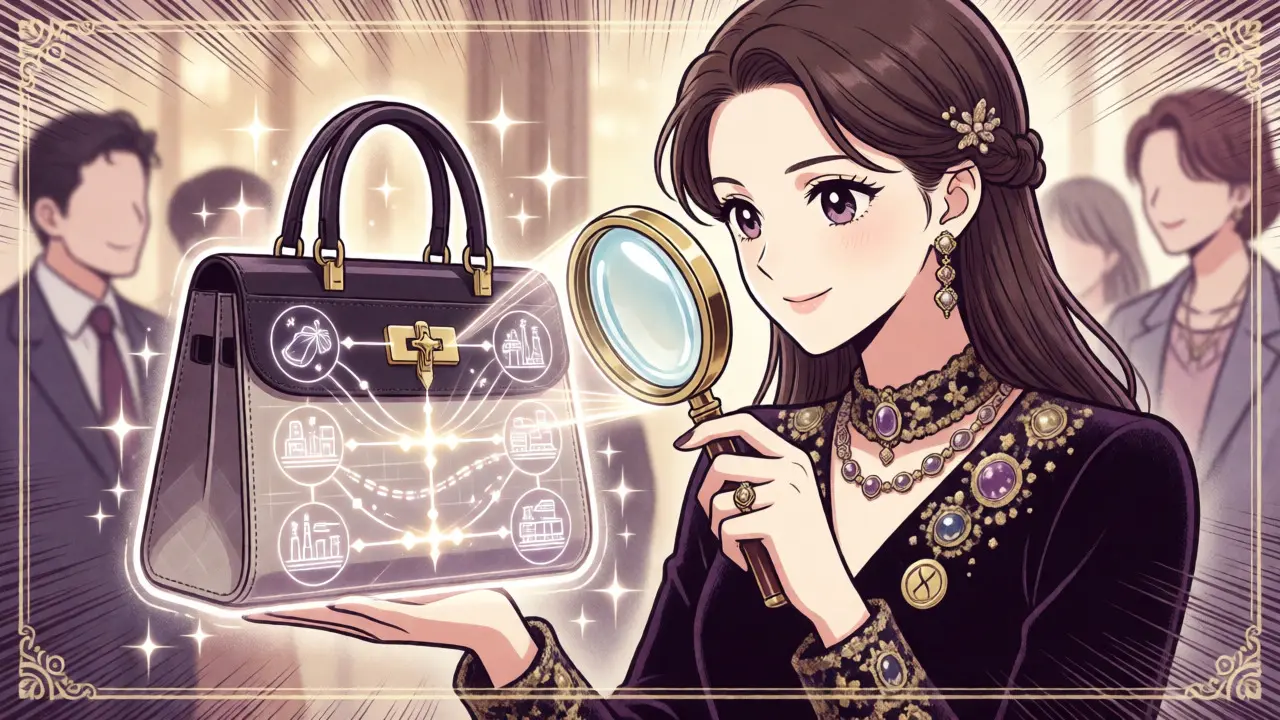
Counterfeiting is a massive problem, especially in luxury fashion and pharmaceuticals. How do you know that $5,000 handbag is real? Currently, you trust the brand’s tag. With NFTs, the bag comes with a digital twin-an NFT that tracks its journey from raw material to retail shelf.
Provenance Tracking allows consumers to scan a QR code and see the entire history of the product. Who made it? Where were the materials sourced? Has it been repaired? Each step updates the NFT’s metadata. For brands like LVMH or Gucci, this builds trust and combats gray-market diversion. For the consumer, it adds resale value. A verified provenance makes an item easier to sell later because buyers know exactly what they’re getting. It turns a simple purchase into a documented asset.
Ticketing and Event Access
Scalpers ruin live events. They buy up tickets, jack up prices, and leave fans stranded. Traditional e-tickets are easy to fake or duplicate. NFT tickets change the dynamics by encoding rules directly into the token. An event organizer can set a cap on resale prices within the smart contract. If a scalper tries to list a ticket for ten times face value, the contract blocks the sale.
Furthermore, NFT tickets don’t expire when the event ends. They become collectibles or keys to future perks. Did you attend Taylor Swift’s Eras Tour? Your NFT ticket could grant you access to exclusive merchandise drops or voting rights on her next album cover. This transforms a disposable piece of paper into a lasting relationship between the artist and the fan. It reduces fraud, increases revenue for creators through secondary royalties, and enhances the customer experience.
Music, Media, and Intellectual Property
Musicians often complain about how little they get from streaming platforms. Labels take a cut, distributors take a cut, and the artist gets crumbs. NFTs offer a way to bypass intermediaries. Artists can release albums or singles as NFTs, selling them directly to fans. Smart contracts ensure that whenever that music NFT is resold, the original creator gets a percentage automatically. No waiting for quarterly reports from a label.
Beyond music, NFTs help protect intellectual property. Code libraries, design files, and patents can be registered as NFTs. This creates an immutable timestamp proving who created the work and when. In industries like software development or architecture, proving ownership of a specific design iteration can save legal battles down the line. It’s a low-cost way to anchor creative work in a verifiable timeline.
Environmental Assets and Carbon Credits
Carbon markets are notoriously opaque. Double-counting credits and lack of transparency undermine trust in environmental initiatives. NFTs bring clarity to this space. Each carbon credit can be minted as a unique NFT linked to a specific project-a tree planted in Brazil, a wind farm built in New Zealand. Once the credit is used to offset emissions, the NFT is burned or marked as retired on-chain. Everyone can see it’s gone. No double-spending.
This transparency attracts institutional investors who need auditable ESG (Environmental, Social, and Governance) metrics. By moving carbon trading onto blockchain rails, companies can prove their sustainability claims with hard data rather than vague marketing statements. It’s a small application, but it addresses a critical global issue with technical precision.
| Feature | Traditional System | NFT-Based System |
|---|---|---|
| Ownership Verification | Centralized database; relies on issuer | Public ledger; anyone can verify |
| Transfer Speed | Days to weeks (e.g., real estate) | Minutes to hours (on-chain settlement) |
| Royalties/Resale | Often lost to intermediaries | Automated via smart contracts |
| Interoperability | Siloed platforms | Potential cross-platform usage |
| Fraud Resistance | Vulnerable to forgery/duplication | Cryptographically secure |
Challenges and Future Outlook
It’s not all smooth sailing. User experience remains a hurdle. Managing private keys and paying gas fees confuses mainstream users. Regulatory frameworks vary wildly by country, creating uncertainty for businesses wanting to tokenize assets. Scalability is another concern; high transaction volumes can clog networks and drive up costs, though newer chains like Solana or Polygon are addressing this.
However, the trend is clear. NFTs are moving from speculative assets to functional utilities. We are seeing fewer "get rich quick" projects and more enterprise pilots in logistics, identity, and finance. The winners won’t be the ones selling the prettiest pictures, but the ones using NFTs to remove friction from existing processes. Whether it’s verifying a degree, selling a house, or tracking a luxury watch, the underlying promise is efficiency and trust.
Are NFTs only useful for digital items?
No. While NFTs are digital tokens, they frequently represent physical assets. Examples include real estate titles, luxury goods like watches and handbags, and supply chain items. The NFT acts as a digital passport or certificate of authenticity for the physical object.
How do NFTs improve the ticketing industry?
NFT tickets reduce fraud and scalping by embedding resale rules in smart contracts. Organizers can cap resale prices and earn royalties on secondary sales. Additionally, tickets remain valid post-event as collectibles or membership passes, enhancing fan engagement.
Can NFTs replace university degrees?
They can complement or replace traditional paper certificates. Issuing degrees as NFTs allows employers to verify credentials instantly on the blockchain, eliminating manual background checks. It also prevents diploma fraud since the record is immutable and publicly verifiable.
What is fractional ownership in real estate?
Fractional ownership divides a property’s equity into multiple NFT tokens. Investors can buy one or more tokens instead of the whole property. This lowers the barrier to entry and increases liquidity, as tokens can be traded on secondary markets.
Do NFTs have environmental impacts?
Early blockchains used energy-intensive Proof-of-Work consensus. However, many modern networks use Proof-of-Stake, which is significantly more energy-efficient. Some platforms even operate carbon-negatively, making NFTs viable for environmental applications like carbon credit tracking.