
Norway's Crypto Mining Ban: Data Center Rules & Restrictions Explained
 May, 19 2026
Imagine building a massive server farm in one of the greenest countries on Earth, only to have the government tell you that your plug is effectively unplugged before you even flip the switch. That is exactly what happened in Norway, which has become the most restrictive jurisdiction in Europe for cryptocurrency mining. If you are looking to expand your operations into Scandinavia, or if you are an existing operator wondering if your license is safe, the landscape has shifted dramatically since January 2025.
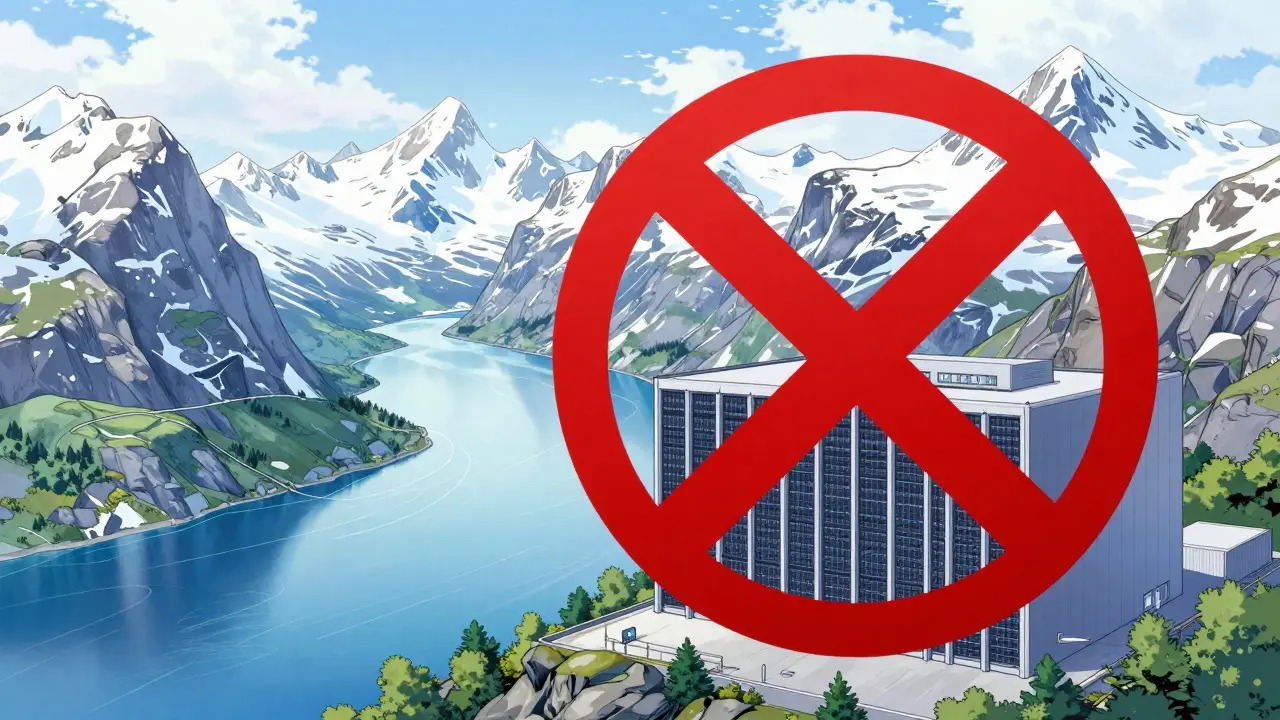
Norway did not just tweak a few rules; it built a wall around its hydroelectric power. The country introduced the world’s first comprehensive national regulatory framework specifically targeting crypto mining data centers. This isn't about banning Bitcoin itself-it's about controlling who gets to use the electricity to mine it. With a mandatory registration system enforced by the Norwegian Communications Authority (Nkom) and a temporary ban on new mining facilities starting in autumn 2025, the message from Oslo is clear: renewable energy is too valuable to be wasted on speculative digital assets.
The Two-Pronged Regulatory Framework
To understand why Norway is now off-limits for new miners, you have to look at the two main pillars of their strategy. These were implemented by different government bodies but work together to squeeze out new entrants while keeping tabs on those already operating.
The first pillar is the Data Center Registration System. Under the Norwegian Electronic Communications Act, which came into force on January 1, 2025, every data center must register with Nkom. Existing operators had until July 1, 2025, to comply. New ones must register before breaking ground. This isn't a simple form fill-out. Operators must disclose their company name, physical address, legal status, and a designated representative for government contact. More importantly, they must provide detailed service descriptions and customer lists.
This transparency requirement is the trapdoor for crypto miners. By forcing operators to declare whether they host cryptocurrency mining services, the government gains full visibility into who is consuming how much power. Non-compliance carries financial penalties of up to 5% of annual turnover. That is a staggering fine, designed to ensure that no one hides behind shell companies or vague business descriptions.
The second pillar is the Temporary Ban on New Mining Operations. Announced in April 2024 and set to begin in autumn 2025, this ban targets facilities using the most energy-intensive mining technologies. It does not shut down existing mines, but it prevents any new construction or expansion. Minister Karianne Tung of the Ministry of Digitalization and Public Administration stated clearly that the Labour Party government intends to limit crypto mining "as much as possible." Energy Minister Terje Aasland added that electricity should be redirected to industries that provide greater social and economic benefits, such as manufacturing and public services.
Why Norway Is Cracking Down on Crypto Mining
You might wonder why a country with abundant hydroelectric power would restrict usage. After all, Norway generates more than enough electricity for its domestic needs. The issue isn't scarcity; it's allocation.
The Norwegian government argues that cryptocurrency mining consumes excessive electricity while generating minimal employment and local economic benefit. Minister Tung described crypto mining as "very power-intensive and generates little in the way of jobs and income for the local community." In their view, powering a row of ASIC miners in a remote warehouse does less for the local economy than powering a factory that employs hundreds of people.
This represents a fundamental shift in how Nordic countries approach renewable energy. Historically, neighbors like Iceland, Sweden, and Finland attracted mining operations with competitive electricity pricing and favorable regulations. Norway is flipping the script. They are treating their hydroelectric resources as a strategic asset to be protected for traditional industries and climate goals, rather than a commodity to be sold to the highest bidder in the crypto market.
| Country | New Mining Facilities | Existing Operations | Registration Requirement | Primary Motivation |
|---|---|---|---|---|
| Norway | Banned (Autumn 2025) | Allowed (Monitored) | Mandatory (Strict) | Energy Conservation & Local Jobs |
| Iceland | Allowed | Allowed | Standard | Revenue Generation |
| Sweden | Allowed | Allowed | Standard | Tax Revenue & Industry Growth |
| Finland | Allowed | Allowed | Standard | Tech Sector Development |

Impact on Existing Miners and Investors
If you already have a facility running in Norway, you are not being shut down overnight. However, your days of flying under the radar are over. The registration requirements mean you are now fully visible to regulators. You must report your operational details, including customer lists. This creates a significant compliance burden.
Small-scale miners are particularly affected. The administrative costs for legal documentation and ongoing reporting obligations can eat into thin margins. Large international firms face similar challenges, but they also face uncertainty about the future. The current ban is "temporary," but government officials have suggested ongoing evaluations. There is a real risk that restrictions could expand beyond new construction to include operational limits on existing facilities.
For investors, the signal is unambiguous. International mining companies have reportedly relocated planned investments to jurisdictions with more favorable environments. Other Nordic countries, as well as North American locations with abundant renewable energy, are seeing an influx of capital. This regulatory arbitrage is reshaping the global hash rate distribution, potentially affecting network security metrics as mining concentrates in fewer, friendlier regions.

Compliance Challenges and Enforcement
Implementing these rules is not without hurdles. One major challenge is defining the precise energy consumption thresholds for the temporary ban. The public documentation does not specify exactly how many kilowatts trigger the prohibition. This ambiguity creates legal gray areas for borderline operations. Some operators may argue their technology is efficient enough to qualify, leading to potential disputes.
Enforcement involves multiple agencies. Nkom handles the data center registry, while the Ministry of Energy oversees the broader energy policy. Additionally, the Norwegian Financial Supervisory Authority (FSA) is implementing the Markets in Crypto Assets (MiCA) regulation. This adds another layer of complexity. Miners must navigate both energy restrictions and financial services regulations, requiring specialized legal expertise.
The threat of fines up to 5% of annual turnover ensures that compliance is taken seriously. Unlike softer recommendations, these are hard legal mandates. The government has signaled that it will use the registry to identify non-compliant entities and act swiftly. For anyone considering operating in Norway, the cost of ignoring these rules is simply too high.
Future Outlook: A Model for Europe?
Norway’s approach is being watched closely by other nations. As climate concerns grow, more governments may question the value of subsidizing crypto mining with public resources or clean energy. Norway serves as a testing ground for balancing renewable energy utilization with digital asset industry growth.
If the temporary ban proves effective in redirecting power to traditional industries without causing significant economic disruption, other countries may follow suit. Conversely, if the restrictions lead to capital flight and reduced tax revenues, the model may be reconsidered. For now, however, the door is closed to new entrants.
The tension between technological innovation and resource conservation is central to this debate. Environmental advocacy groups generally support Norway’s stance, viewing it as a necessary step toward sustainable energy policy. Cryptocurrency advocates, meanwhile, criticize the restrictions as technologically discriminatory, arguing that blockchain technology offers long-term benefits that outweigh short-term energy costs.
As we move through 2026, the situation remains fluid. Existing operators must stay vigilant, preparing for potential expansions of the ban. New investors should look elsewhere. Norway has made its choice: it values its hydroelectric power for its people and its industries, not for its servers.
Is cryptocurrency mining completely banned in Norway?
No, it is not completely banned. Existing mining operations are allowed to continue. However, there is a temporary ban on new cryptocurrency mining data centers, scheduled to begin in autumn 2025. This means you cannot build new facilities or expand existing ones significantly.
What happens if I don't register my data center with Nkom?
Non-compliance carries severe financial penalties. Fines can reach up to 5% of your annual turnover. This is one of the strictest enforcement mechanisms in the European data center industry, designed to ensure full transparency and adherence to energy policies.
When did the data center registration requirement start?
The requirement came into force on January 1, 2025, under the Norwegian Electronic Communications Act. Existing data centers had a transition period until July 1, 2025, to complete their registration. New data centers must register before construction begins.
Why is Norway restricting crypto mining?
The government believes that cryptocurrency mining consumes excessive electricity while providing minimal local employment and economic benefit. They want to redirect this abundant hydroelectric power to traditional industries, manufacturing, and public services that create more jobs and social value.
How does Norway's policy compare to other Nordic countries?
Norway is the most restrictive. Countries like Iceland, Sweden, and Finland have historically welcomed crypto mining due to cheap renewable energy and favorable regulations. Norway is the only one in the region to implement a ban on new mining facilities and enforce strict data center registration specifically targeting crypto activities.
Will existing mining operations be shut down?
Currently, no. Existing operations are allowed to continue. However, they must comply with strict registration and reporting requirements. There is ongoing discussion about potentially expanding restrictions in the future, so operators should monitor policy developments closely.