
Ruby.Exchange Review: Is It Safe or a Scam in 2026?
 Jun, 15 2026
Have you ever received an urgent message on Telegram or WhatsApp claiming that a new crypto platform called Ruby.Exchange (or Ruby-X) has launched with guaranteed high returns? You click the link, see a sleek website promising easy profits, and feel a mix of excitement and hesitation. That hesitation is your best friend right now.
In the world of digital assets, trust is everything. But when it comes to Ruby.Exchange, there is almost nothing to trust. As of mid-2026, this platform lacks any verifiable history, regulatory oversight, or genuine user community. This isn't just a review of features; it's a safety check. If you are looking for a place to park your savings, stop here. If you are trying to understand why this name keeps popping up in suspicious ads, keep reading. We will break down what Ruby.Exchange actually is, why experts warn against it, and how to protect yourself from similar traps.
What Exactly Is Ruby.Exchange?
Ruby.Exchange, often branded as Ruby-X, markets itself as a comprehensive cryptocurrency trading platform. The developers describe it using buzzwords like "Straightforward," "Extensible," and "Unbreakable." They claim to offer cold wallet functionality and easy exchanges between various digital currencies. On paper, these sound like standard features for any modern exchange.
However, digging deeper reveals a hollow shell. Unlike established platforms such as Kraken or Crypto.com, which have transparent company structures, public leadership teams, and years of operational history, Ruby.Exchange operates in the shadows. There are no founding details available. There is no physical address listed for their headquarters. Most importantly, there is no record of them being registered with financial authorities like the SEC in the US, the FCA in the UK, or FinCEN in New Zealand.
This absence of basic corporate transparency is not an oversight; it is a red flag. Legitimate exchanges must comply with Anti-Money Laundering (AML) and Know Your Customer (KYC) regulations. These rules require them to prove who they are and where they operate. Ruby.Exchange fails this most basic test of legitimacy.
The Silence Speaks Volumes: Lack of Reviews and Audits
In the crypto industry, reputation is built on visibility. When a platform launches, you expect to find discussions on Reddit, reviews on Trustpilot, and analysis on major crypto news sites. For Ruby.Exchange, the silence is deafening.
- No Independent Audits: Reputable exchanges undergo security audits by firms like CertiK or Hacken. These audits verify that the code is secure and funds are safe. Ruby.Exchange has no published audit reports.
- Zero User Feedback: A quick search on Trustpilot or major crypto forums yields no genuine user testimonials. While some scam sites buy fake five-star reviews, the complete lack of organic discussion suggests very few real users exist-or those who tried it had terrible experiences they couldn't share due to fund loss.
- No Media Coverage: Major outlets like CoinDesk, Cointelegraph, or Bloomberg do not cover Ruby.Exchange. In an industry that thrives on hype, being ignored is a sign that the platform has no market presence.
If a platform claims to be "world-class" but cannot produce a single independent review or security certificate, take that claim with a massive grain of salt. The burden of proof is on the exchange, not you. And so far, they have provided none.
Comparing Ruby.Exchange to Legitimate Platforms
To understand why Ruby.Exchange stands out negatively, let's compare it to established players in the 2026 market. The difference is stark.
| Feature | Ruby.Exchange (Ruby-X) | Kraken | Crypto.com |
|---|---|---|---|
| Regulatory Status | Unknown / Unregistered | Licensed in multiple jurisdictions | Licensed globally |
| Security Audits | None published | Regular third-party audits | Regular third-party audits |
| User Base Transparency | Hidden | Millions of verified users | Millions of verified users |
| Fees | Unclear / Hidden costs likely | Transparent (Maker 0.16% - Taker 0.26%) | Transparent tiered structure |
| Customer Support | Non-existent or bot-only | 24/7 Human support | 24/7 Human support |
Notice the pattern? Legitimate exchanges compete on low fees, high liquidity, and strong security. Ruby.Exchange competes on mystery. They promise "straightforward" trading but hide the mechanics behind closed doors. This opacity allows them to manipulate prices, delay withdrawals, or simply disappear with user funds-a tactic known in the industry as a "rug pull."">
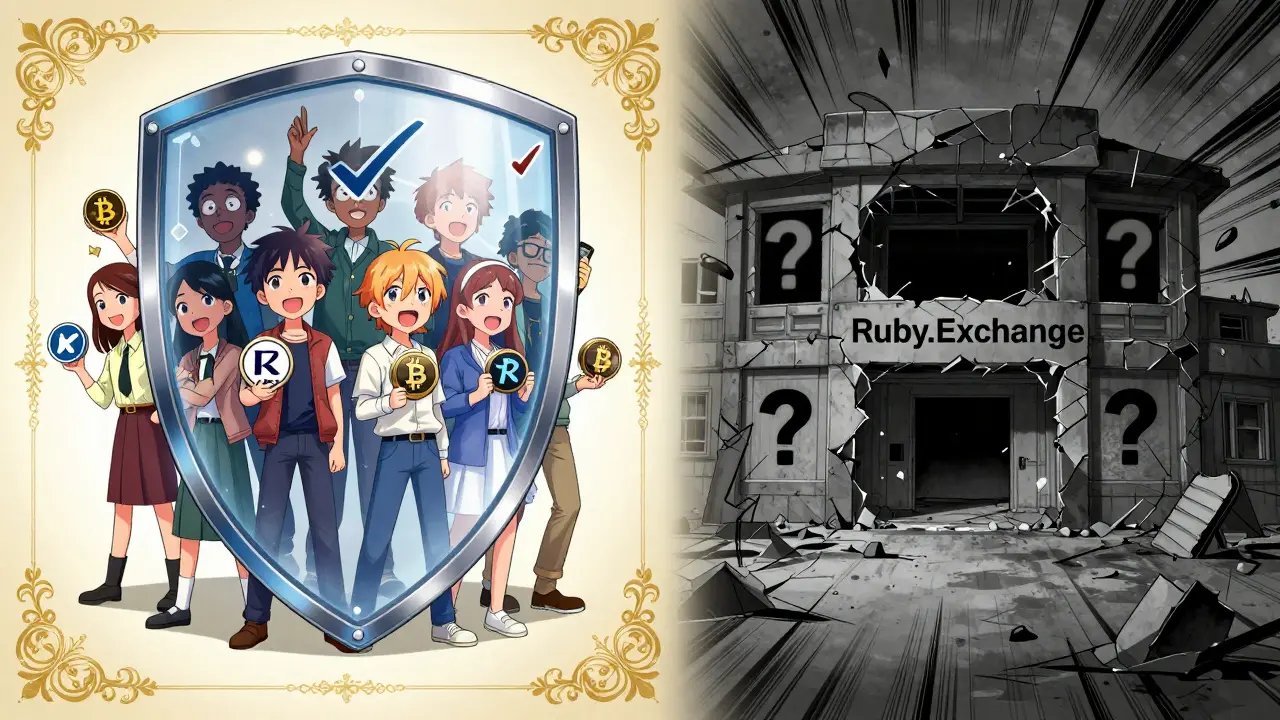
Common Red Flags of Crypto Scams
Even if you haven't heard of Ruby.Exchange specifically, you can spot its type of operation by recognizing common scam patterns. Here is what to watch out for:
- Guaranteed Returns: No legitimate investment guarantees profit. If Ruby.Exchange or their promoters promise "risk-free" or "guaranteed" daily gains, it is a Ponzi scheme.
- Pressure to Act Fast: Scammers create urgency. Messages like "Sign up today before the price jumps!" are designed to bypass your critical thinking.
- Unverified Social Media Managers: Be wary of "success coaches" on Instagram or TikTok who show off luxury cars and claim they made it all through one specific exchange. These are often paid actors or bots.
- Complex Withdrawal Processes: Many shady platforms allow you to deposit easily but make withdrawing difficult by demanding arbitrary "taxes" or "verification fees." Never pay a fee to withdraw your own money.
Ruby.Exchange fits several of these profiles. The lack of clear fee structures and the vague technical descriptions suggest a platform designed to confuse rather than serve.
How to Verify Any Crypto Exchange Before Depositing
You don't need to be a blockchain expert to stay safe. Follow this simple checklist before trusting any platform with your funds:
- Check Regulatory Licenses: Visit the official websites of financial regulators (like the SEC, FCA, or MAS). Search for the exchange's name. If they aren't listed, assume they are unregulated.
- Search for Independent Reviews: Go beyond the exchange's own website. Look for discussions on Reddit (r/CryptoCurrency), Trustpilot, and specialized crypto forums. Read the negative reviews carefully.
- Verify Security Measures: Does the site mention Two-Factor Authentication (2FA)? Do they store most funds in cold storage? Are there recent security audit reports linked?
- Test with Small Amounts: If you still want to try a new platform, start with an amount you can afford to lose completely. Try to withdraw it immediately. If the withdrawal is delayed or blocked, close the account instantly.
Applying this checklist to Ruby.Exchange results in a fail grade across the board. There is no regulatory footprint, no independent verification, and no reason to trust the platform with even a small deposit.

Safe Alternatives for Trading in 2026
If you are looking to trade cryptocurrencies, stick to platforms with proven track records. Here are three reputable options that prioritize security and transparency:
Kraken: Known for deep liquidity and robust security. Kraken has never been hacked since its launch in 2011. They offer a wide range of coins and competitive fees, making them suitable for both beginners and advanced traders.
Crypto.com: Ideal for users who want an all-in-one ecosystem. From trading to spending via their Visa card, Crypto.com offers a user-friendly interface. Their security is backed by regular audits and insurance coverage for digital assets held in custody.
Coinbase: One of the largest publicly traded exchanges in the US. Coinbase is highly regulated and offers excellent educational resources for beginners. While fees can be higher for retail users, the peace of mind regarding compliance is worth it for many.
These platforms may not promise "guaranteed" riches, but they provide a safe, legal, and transparent environment to grow your portfolio over time.
Conclusion: Stay Away from Ruby.Exchange
The crypto market is full of opportunities, but it is also rife with predators. Ruby.Exchange exhibits all the classic signs of a fraudulent or highly risky platform. The lack of regulatory information, the absence of independent reviews, and the opaque business model should be enough to deter any rational investor.
Don't let the allure of "easy money" blind you to the risks. Protect your capital by choosing established, regulated exchanges. If a platform hides its identity, it probably has something to hide. Stick to the lights, not the shadows.
Is Ruby.Exchange a scam?
While we cannot legally label it a scam without a court ruling, Ruby.Exchange displays numerous red flags associated with fraudulent platforms. These include a lack of regulatory registration, no independent security audits, and zero verifiable user reviews. Proceeding with caution is strongly advised.
Who owns Ruby.Exchange?
The ownership of Ruby.Exchange is not publicly disclosed. Legitimate companies list their leadership team and corporate structure. The anonymity of Ruby.Exchange's owners is a significant warning sign.
Can I withdraw money from Ruby.Exchange?
There are no verified reports of successful withdrawals from Ruby.Exchange. Many similar platforms block withdrawals once a user tries to cash out, often demanding additional "fees" that are never refunded. Assume your funds may be inaccessible.
Is Ruby.Exchange regulated?
No. Ruby.Exchange does not appear on the registers of major financial regulators such as the SEC (USA), FCA (UK), or FinCEN (New Zealand). Operating without regulation means you have no legal recourse if you lose money.
What are the safest crypto exchanges in 2026?
As of 2026, Kraken, Coinbase, and Crypto.com are considered among the safest due to their long track records, regulatory compliance, and frequent security audits. Always verify current status before depositing.