
The Recharge Incentive Drop Airdrop: Safety Guide & Red Flags
 May, 4 2026
You’ve probably seen the buzz about The Recharge Incentive Drop is a cryptocurrency distribution event currently lacking verifiable official documentation or reputable source coverage. It sounds promising-free tokens, incentives, rewards. But here’s the hard truth: there is zero credible information available from established crypto platforms, news outlets, or community trackers about this specific project. When an airdrop has “Unknown details,” that isn’t a mystery; it’s a massive red flag.
In the world of digital assets, visibility equals legitimacy. Legitimate projects spend months building hype through verified channels. They have whitepapers, active Discord servers, and clear roadmaps. If you can’t find basic facts about who is running the show, where the funds come from, or how the token works, you are likely looking at a trap. This guide breaks down why you should pause before connecting your wallet, how to spot these vague opportunities, and what legitimate airdrops actually look like in 2026.
Why "Unknown Details" Is a Major Warning Sign
When you search for a major financial opportunity and find nothing but silence from authoritative sources, something is wrong. The absence of data regarding The Recharge Incentive Drop suggests several dangerous possibilities. First, it could be a brand-new scam designed to steal private keys or drain connected wallets. Second, it might be a low-effort pump-and-dump scheme where creators mint tokens, create fake hype, and then sell everything, leaving participants with worthless assets. Third, the name itself might be a copycat of a real project, designed to confuse users.
Legitimate blockchain projects do not operate in the shadows. Even early-stage startups have a presence on platforms like CoinGecko, CoinMarketCap, or dedicated tracking sites like Airdrop.io. If a project is not listed on these databases, it has not undergone the basic scrutiny required to be considered safe. Remember, in crypto, if you have to ask "is this real?" because no one knows anything about it, the answer is usually "no."
Anatomy of a Safe Crypto Airdrop
To understand why The Recharge Incentive Drop raises alarms, let’s look at what a safe, legitimate airdrop looks like. Real airdrops are marketing tools used by established teams to reward early adopters and build community. They fall into a few distinct categories, each with clear rules.
- Task-Based Airdrops: These require simple actions like following a project on Twitter, joining a Telegram group, or sharing content. They are beginner-friendly and carry no financial risk because you don’t need to deposit money. Examples include early campaigns by Galxe or Layer3.
- Interaction-Based Airdrops: These involve using a protocol-swapping tokens, providing liquidity, or bridging assets. Projects like Uniswap and Arbitrum famously rewarded users who interacted with their platforms before launching their tokens. These require gas fees but offer higher potential returns.
- Holder Airdrops: These distribute new tokens to people who already hold a specific cryptocurrency. For example, NEO holders received Ontology (ONT) tokens in 2018. This method ensures rewards go to existing community members.
All these legitimate examples share one trait: transparency. You know exactly who is giving the tokens, why they are giving them, and what you need to do to qualify. There are no "unknowns."

How Scammers Exploit Vague Promises
Scammers thrive on confusion and greed. They use names that sound professional but lack substance. "Recharge," "Incentive," and "Drop" are generic words that evoke positive feelings without committing to any specific technology or utility. This vagueness allows them to change their story as needed or simply disappear after collecting personal data.
A common tactic involves creating a fake website that looks professional but lacks critical links. Check the footer: does it link to a GitHub repository? Is there a verified social media handle? Often, scammers will direct you to connect your wallet to a "claim page." Once you sign the transaction, you aren’t claiming tokens-you’re granting them permission to drain your entire balance. This is known as a malicious smart contract approval.
Another danger is the "honeypot" token. You might successfully receive the tokens, but when you try to sell them, you realize you can’t. The code prevents selling, trapping your investment. Or worse, the token price crashes instantly because the developers dump their large allocation on the market, leaving you with losses.
Verification Steps Before Participating
If you are tempted by any airdrop with unclear details, follow this strict verification checklist. Do not skip steps. Your financial security depends on it.
- Check Official Sources: Search for the project on CoinGecko and CoinMarketCap. If it’s not there, proceed with extreme caution.
- Verify Social Media: Look for blue-check marks or high follower counts on X (Twitter) and Discord. Be wary of bots. Read the comments-are people asking questions, or just saying "great project"?
- Inspect the Website: Use tools like Whois to see when the domain was registered. New domains (less than 6 months old) are risky. Check for broken links or poor grammar.
- Community Feedback: Search Reddit and specialized forums. Look for warnings. If no one is talking about it, that’s a warning in itself.
- Smart Contract Analysis: If you must interact, use a burner wallet-a separate wallet with no significant funds. Never connect your main wallet to unverified sites.
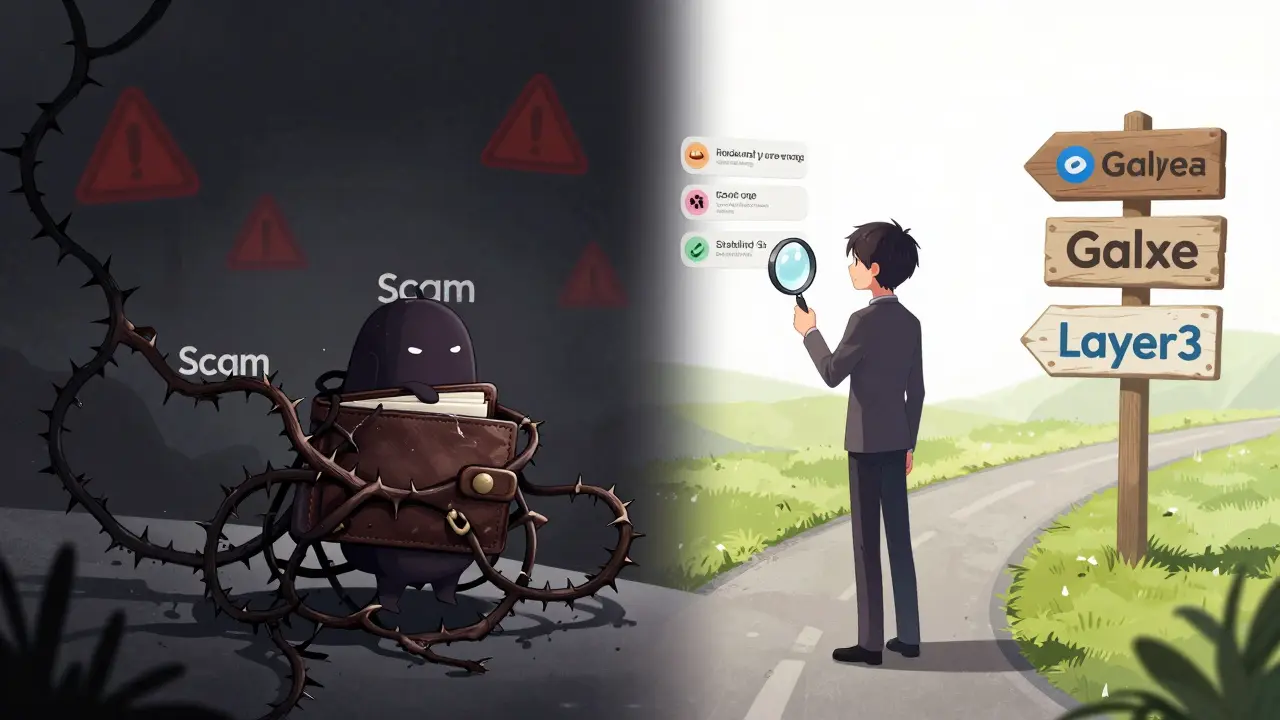
Comparison: Legitimate vs. Suspicious Airdrops
| Feature | Legitimate Airdrop | Suspicious Airdrop (e.g., Recharge Incentive Drop) |
|---|---|---|
| Information Availability | Extensive coverage on news sites and trackers | No info on major platforms; "Unknown details" |
| Team Identity | Public team members with LinkedIn profiles | Anonymous or fake identities |
| Requirements | Clear tasks: follow, join, swap | Vague promises, pressure to connect wallet immediately |
| Community Presence | Active, organic discussion on Discord/Twitter | Empty channels, bot comments, or no community |
| Risk Level | Low to Moderate (gas fees only) | High (risk of theft, scams, total loss) |
What To Do Instead: Safer Alternatives
Instead of chasing ghosts like The Recharge Incentive Drop, focus on proven opportunities. Many Layer 2 solutions and DeFi protocols regularly reward early users. Platforms like zkSync, Scroll, and StarkNet have histories of rewarding testnet users and mainnet interactors.
You can also explore established bounty programs. Websites like Cointelegraph’s airdrop section or DappRadar list verified opportunities. These platforms vet projects before listing them, saving you time and reducing risk. Remember, the best airdrops are those that align with projects you already use and believe in. If you’re using a bridge or a swap platform anyway, checking if they have a future token incentive is a natural, low-risk move.
Patience is key. The biggest payouts in history came from projects that were transparent from day one. Ethereum Name Service (ENS) gave away governance tokens to early domain registrants. Optimism rewarded users who helped build its ecosystem. These weren’t secret drops; they were public, documented events. Stick to the light, and avoid the shadows.
Is The Recharge Incentive Drop a scam?
While we cannot definitively label it a scam without proof, the complete lack of verifiable information, official documentation, and presence on reputable crypto tracking platforms makes it highly suspicious. Treat it as a potential scam until proven otherwise by credible sources.
How can I verify if an airdrop is legitimate?
Check for the project on CoinGecko or CoinMarketCap. Verify the team’s identity on LinkedIn or Twitter. Look for active, organic community discussions on Discord or Reddit. Ensure the website has been live for more than a few months and includes links to audited smart contracts or GitHub repositories.
What are the risks of participating in unknown airdrops?
The primary risks include wallet draining via malicious smart contracts, receiving worthless tokens that cannot be sold (honeypots), and falling victim to pump-and-dump schemes where developers crash the price after you buy in. You may also expose personal data to phishing attacks.
Should I connect my main wallet to claim this airdrop?
Never connect your main wallet to an unverified site. If you choose to participate despite the risks, use a "burner wallet"-a separate wallet address with minimal funds. This limits your potential loss to a small amount if the site is malicious.
Where can I find safe airdrop opportunities in 2026?
Look for opportunities on established platforms like Galxe, Layer3, or DappRadar. Follow announcements from well-known Layer 2 networks like Arbitrum, Optimism, and zkSync. Always prioritize projects with transparent teams and active communities over vague, anonymous offers.