
Velocimeter v2 Review: Is This Canto DEX Safe to Use in 2026?
 Jul, 4 2026
Imagine trying to buy a house where the only buyer and seller are your neighbor and his dog. You wouldn’t do it, right? The market is too thin, the price is meaningless, and you’d likely lose money just trying to complete the transaction. Now, imagine doing that with your cryptocurrency on a platform called Velocimeter v2, which is a decentralized exchange (DEX) operating primarily on the Canto blockchain with extremely low trading volume.. That’s the reality for most users looking at this specific protocol today.
You clicked here because you saw the name, maybe confused it with something bigger, or heard a rumor about high yields. I get it. The DeFi space is noisy, and names sound similar. But after digging into the data available as of mid-2026, the picture is starkly different from what you might expect from a "v2" upgrade of a major platform. This isn't a powerhouse like Uniswap or PancakeSwap. It’s a tiny, experimental corner of the internet with serious red flags regarding liquidity and transparency.
The Name Game: Don’t Get Fooled by Similarities
Before we look at the numbers, let’s clear up a massive point of confusion. Many people searching for "Velocimeter" are actually looking for Velodrome Finance, which is a popular decentralized exchange on the Optimism network known for its ve(3,3) model and significant liquidity.. These two are completely unrelated. Velodrome handles millions in daily volume. Velocimeter v2 handles... well, let's check the math later.
The name "Velocimeter" comes from velocimetry-the measurement of fluid velocity. The developers argued that liquidity flows like fluid through their Automated Market Maker (AMM). It’s a clever metaphor, sure. But metaphors don’t pay out withdrawals when the pool is empty. If you are reading this thinking you found the next big thing on Optimism or Ethereum, stop. You’re looking at a niche protocol on the Canto Blockchain, which is an EVM-compatible Layer 1 blockchain focused on financial applications..
The Liquidity Problem: A Ghost Town?
Liquidity is the lifeblood of any decentralized exchange. Without it, you can’t trade without suffering massive slippage (paying way more than the asset is worth). Let’s look at the hard data from major trackers like CoinGecko and CoinMarketCap. The numbers are not just small; they are erratic.
| Metric | CoinGecko Data | CoinMarketCap Data | Reality Check |
|---|---|---|---|
| 24h Volume | $320.94 | $23.37 | Extremely Low |
| Active Pairs | 2 | 2 | Virtually Non-existent |
| Trust Score | N/A | N/A | Unrated |
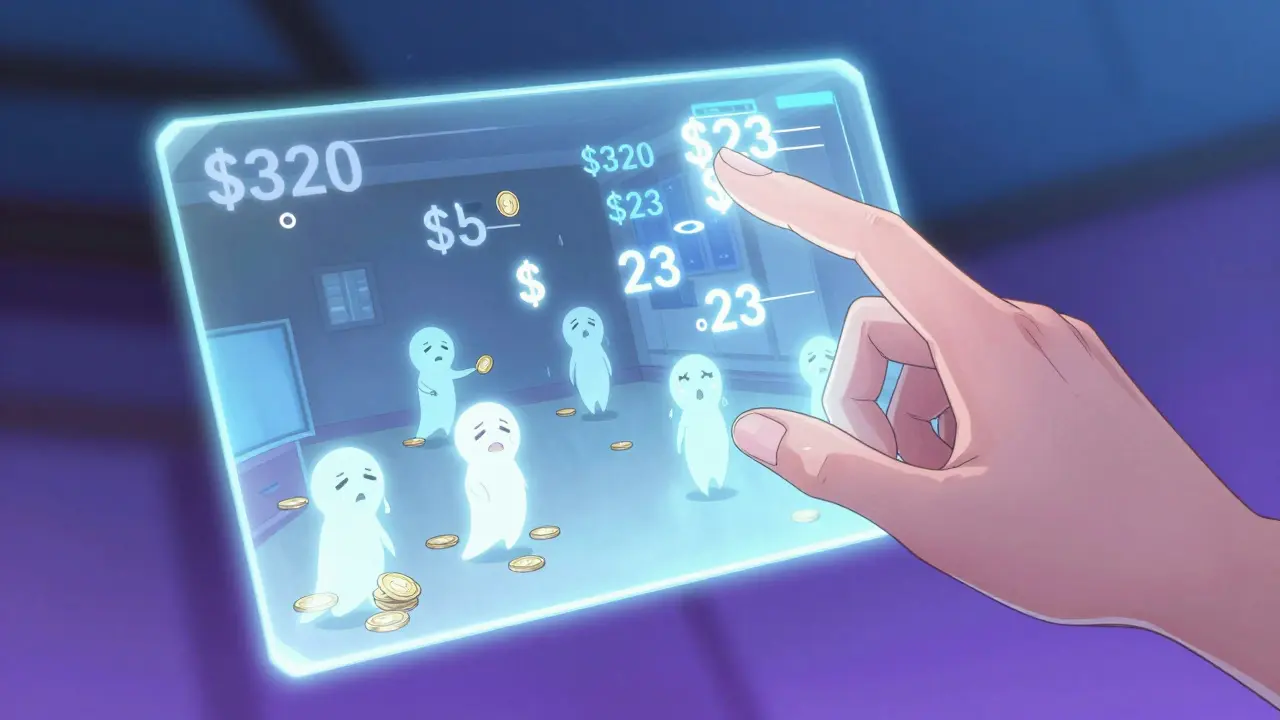
Did you see that discrepancy? One tracker says $320 in a day. Another says $23. In the world of crypto, where Bitcoin moves billions in seconds, $320 is nothing. It’s less than the cost of a decent lunch in Wellington. This volatility in reporting suggests the data scrapers are struggling to find consistent activity, or worse, the "volume" is being artificially inflated by wash trading (bots buying and selling to themselves to fake popularity).
Let’s break down those two trading pairs:
- USDC/USDT: This pair accounts for 96% of the volume. Specifically, it uses Synapse Bridged USDC on Canto. The spread is around 0.84%. For context, major exchanges offer spreads of 0.01% or less. You are paying an 80x higher fee in hidden costs just to swap stablecoins.
- FLOW/CANTO: This pair has $9 in volume. Nine dollars. If you try to sell $1,000 worth of FLOW here, you will crash the price. Your trade will eat the entire pool, and you’ll end up with pennies.
Security and Trust: The Missing Pieces
If you’ve been in crypto for more than six months, you know the golden rule: if there’s no audit, there’s no trust. Major protocols publish their smart contract audits from firms like CertiK or Trail of Bits. They show you exactly where the risks are.
Velocimeter v2 lacks publicly available, comprehensive security audit reports. There is no formal trust score from CoinGecko. Why does this matter? Because decentralized exchanges hold your funds in smart contracts. If there’s a bug in the code-and every complex piece of software has bugs-a hacker can drain the pool. With a pool size this small, a single attack would wipe out 100% of user funds instantly.
Furthermore, the regulatory landscape is tightening. In 2025 and 2026, regulators globally have cracked down on unregistered DeFi protocols. Velocimeter v2 operates without any government oversight. There is no customer support email, no legal entity to sue, and no insurance fund. If the site goes down, or if the developers decide to pull the rug (a common scam tactic), you have zero recourse.
User Experience and Community Silence
I tried to find a community for Velocimeter v2. I checked Reddit, Discord, and Telegram. What did I find? Almost nothing. No active discussion threads. No developer updates. No user reviews complaining about gas fees or praising the UI.
In DeFi, silence is deafening. Healthy projects have noisy communities. Users debate tokenomics, report bugs, and celebrate upgrades. The absence of a community suggests one of two things: either the project is dead, or it’s so new and obscure that nobody cares yet. Given it launched in 2023, it should have built some momentum by now. The lack of social proof is a huge warning sign.
Why Would Anyone Use This?
It’s fair to ask: if it’s this risky, why does it exist? There are a few edge cases where someone might interact with Velocimeter v2:
- Yield Farming Speculation: Sometimes, new pools offer astronomical APYs (Annual Percentage Yields) to attract initial liquidity. You might see 10,000% APY advertised. But remember: high yield = high risk. Often, these yields are paid in the project’s own token, which may be worthless. Once early farmers sell, the price crashes, and latecomers lose everything.
- Canto Ecosystem Experimentation: Developers testing the Canto blockchain might use it to bridge assets. However, even then, established bridges and larger DEXs on Canto are safer bets.
- Accidental Confusion: As mentioned, many users confuse it with Velodrome. Always double-check the URL and the chain.

Better Alternatives for Traders
If you are looking to trade on the Canto blockchain or other EVM chains, stick to platforms with proven track records. Here is a quick comparison to help you make a safer choice.
| Platform | Chain | Daily Volume (Approx) | Audited? | Best For |
|---|---|---|---|---|
| Uniswap | Ethereum/Multi-chain | >$1 Billion | Yes | General Trading |
| PancakeSwap | BSC/EVM | >$500 Million | Yes | Low Fee Swaps |
| Velodrome Finance | Optimism | >$100 Million | Yes | High Yield Farming |
| Canto Swap (Native) | Canto | Varies | Check Current Status | Canto Specific Assets |
Notice the difference in scale? These platforms have millions of users, transparent teams, and regular audits. They aren’t perfect, but they are far less likely to vanish overnight.
Final Verdict: Proceed with Extreme Caution
So, is Velocimeter v2 a scam? Not necessarily. It might just be a failed experiment. But for all intents and purposes, it is unsafe for anyone with capital they care about. The combination of near-zero liquidity, missing security audits, and zero community presence makes it a prime target for exploits or simply irrelevance.
If you absolutely must interact with it-for example, if you already hold a token that only trades there-start with a tiny amount. Assume that money is lost. Do not connect your main wallet. Use a burner wallet with minimal funds. And always verify the contract address directly from a trusted source, never from a random link in a chat room.
In the world of DeFi, survival is the first goal. Profit comes second. Don’t let a confusing name trick you into risking your savings on a ghost town.
Is Velocimeter v2 the same as Velodrome Finance?
No, they are completely different. Velodrome Finance is a major DEX on the Optimism network with high volume. Velocimeter v2 is a small, low-volume DEX on the Canto blockchain. Do not confuse the two.
What is the minimum trade amount on Velocimeter v2?
While there may be no technical minimum, the practical minimum is very high due to slippage. Because the liquidity pool is tiny (under $1,000 total volume), trading even $100 could cause massive price impact, meaning you lose value immediately. It is not suitable for normal trading sizes.
Has Velocimeter v2 been audited for security?
There are no widely publicized or easily accessible smart contract audit reports for Velocimeter v2 from reputable firms. This is a significant security risk, as unaudited code is more vulnerable to hacks and exploits.
Which blockchain does Velocimeter v2 operate on?
Velocimeter v2 operates primarily on the Canto blockchain. It supports tokens native to Canto and bridged assets like Synapse Bridged USDC.
Is it safe to provide liquidity to Velocimeter v2?
Providing liquidity to Velocimeter v2 is highly risky. Due to low trading volume, you may suffer from impermanent loss without earning sufficient fees. Additionally, the lack of audits means your funds could be drained by a smart contract exploit. Only use funds you are prepared to lose entirely.
Michelle Walker
July 4, 2026 AT 23:10Wake up. The data is right there in front of you. $320 volume? That's not a DEX, that's a joke. You're basically donating to the devs if you touch this. Stop looking for yield in garbage.
Kat Barr
July 6, 2026 AT 05:10Oh my gosh! I am so glad someone wrote this!!! 😱✨ It is honestly terrifying how many people get confused by these names!! I almost clicked on a link last week thinking it was Velodrome!! Thank you so much for saving us from disaster!! 🙏💖 Please keep writing these reviews!!
Logan Edmison
July 6, 2026 AT 12:00the concept of liquidity is just a social construct really. we agree to pretend money has value. but yeah, 9 dollars is pretty low even for philosophy class tuition. maybe the dog is the real trader here?
Shay Thomson
July 7, 2026 AT 11:07I feel such a deep sadness reading about the silence of this community. It’s like a ghost town where hopes went to die. We must be more careful with our digital souls, friends. The void stares back when you trade in empty pools. 😔
DJ Maleko
July 7, 2026 AT 17:21Let me tell you something about Canto. It’s mostly a meme chain for degens who lost everything on Solana. This Velocimeter thing? Probably a honeypot waiting to drain your wallet. Don’t be stupid. Check the contract code yourself if you have time to waste. 🤡
Erika Pozzetto
July 8, 2026 AT 02:49In consideration of the aforementioned metrics, one must conclude that the absence of a comprehensive audit constitutes a significant breach of fiduciary duty towards potential users, thereby rendering any participation in said protocol highly inadvisable due to the inherent risks associated with unaudited smart contracts and the lack of transparent governance structures which are essential for maintaining trust within decentralized financial ecosystems.
Russ Fincham
July 9, 2026 AT 12:20Look, I’m a formal guy but even I can see this is trash. No audits, no volume, no team. It’s a rug pull waiting to happen. Stick to Uniswap or go home. Simple as that.
Tawny Holmes
July 9, 2026 AT 17:51Velodrome is on Optimism. Velocimeter is on Canto. They are different. If you don't know the difference, you don't deserve to make money. Period.
Jessie Smith
July 9, 2026 AT 21:20It is quite amusing how the plebeian masses flock to these shiny new toys without understanding the underlying mechanics of automated market makers. The term 'velocimetry' is merely a pretentious veneer masking a hollow core of inefficiency. One must possess a certain intellectual fortitude to navigate such treacherous waters, lest one be swept away by the currents of ignorance.
Drew M
July 11, 2026 AT 00:30Wow! What a fantastic article! 🌟 I love how detailed this is! It really shows the importance of doing your own research! I always say, if it sounds too good to be true, it probably is! Keep up the great work! 👏🚀
Deep Rahman
July 11, 2026 AT 10:08The flow of liquidity is like the flow of life itself, sometimes strong and sometimes weak, and when it is weak like in this case, it suggests that the spirit of the project is also weak, and perhaps we should look elsewhere for our spiritual and financial nourishment because a dry well cannot quench thirst.
Melissa Beckwith
July 12, 2026 AT 02:42I have been following DeFi since the early days of Ethereum and I can tell you that projects with this level of obscurity usually end in tears. The lack of community engagement is a huge red flag that most people ignore until they lose their shirts. I prefer to stay quiet and observe rather than jump into the fire.
Josephine Finlayson
July 13, 2026 AT 11:58I completely agree with the author!!!! It is so important to stay safe out there!!!!! Please everyone, double check the URLs before you connect your wallets!!!!! Your security is paramount!!!!! ❤️🛡️
Tuan Nguyen
July 14, 2026 AT 23:22This analysis is superficial at best. While the volume is low, it could be a strategic accumulation phase. However, given the lack of audits, it is likely a scam. Most retail traders are too dumb to understand the nuance anyway. Stay away unless you are an expert.
Hazel Fruitman
July 16, 2026 AT 14:13its just wrong to put people at risk like this. the developers should be ashamed of themselves for creating such a dangerous platform. we need more ethics in crypto. stop being greedy and think about the community.
Nick G
July 18, 2026 AT 03:31As someone who appreciates diverse cultural approaches to finance, I find the Western obsession with high yields somewhat concerning. In my experience, slow and steady wins the race. This protocol seems to violate the principles of sustainable growth and community building that are valued in many traditional societies.
Nick Wengel
July 19, 2026 AT 21:32I just use PancakeSwap for everything. It works fine. Why complicate things with obscure chains like Canto? Keep it simple. Buy low, sell high, don't get hacked.
Alicia Hull
July 19, 2026 AT 22:27Could you please elaborate on the specific security vulnerabilities mentioned? I am very concerned about the safety of my assets. Is there any way to verify the contract address manually? I want to ensure I am making an informed decision based on solid facts.
Johan Otto
July 21, 2026 AT 13:54Boring post. Everyone says avoid scams. Wow, groundbreaking insight. I made 10k on a random token yesterday. Maybe try taking risks instead of reading fear-mongering articles. Life is short, live it up! 😂