
What is Harold (HAROLD) Crypto? Solana, Ethereum & BSC Tokens Explained
 Sep, 2 2026
You’ve probably seen him. The older man with a forced smile and eyes that scream "I am suffering internally." That’s Hide the Pain Harold, an internet meme legend born from stock photos of Hungarian model András Arató. Now, his face has migrated onto the blockchain. But here’s the twist: there isn’t just one Harold (HAROLD) cryptocurrency. Depending on which chain you’re looking at, "Harold" could be a lighthearted Solana memecoin, a serious governance token on Ethereum, or a charity-focused DeFi project on Binance Smart Chain. If you’re confused by conflicting price data and supply numbers, you aren’t alone. This guide cuts through the noise to explain exactly what these tokens are, how they differ, and why you need to check the contract address before you buy.
The Identity Crisis: Three Harolds, One Ticker
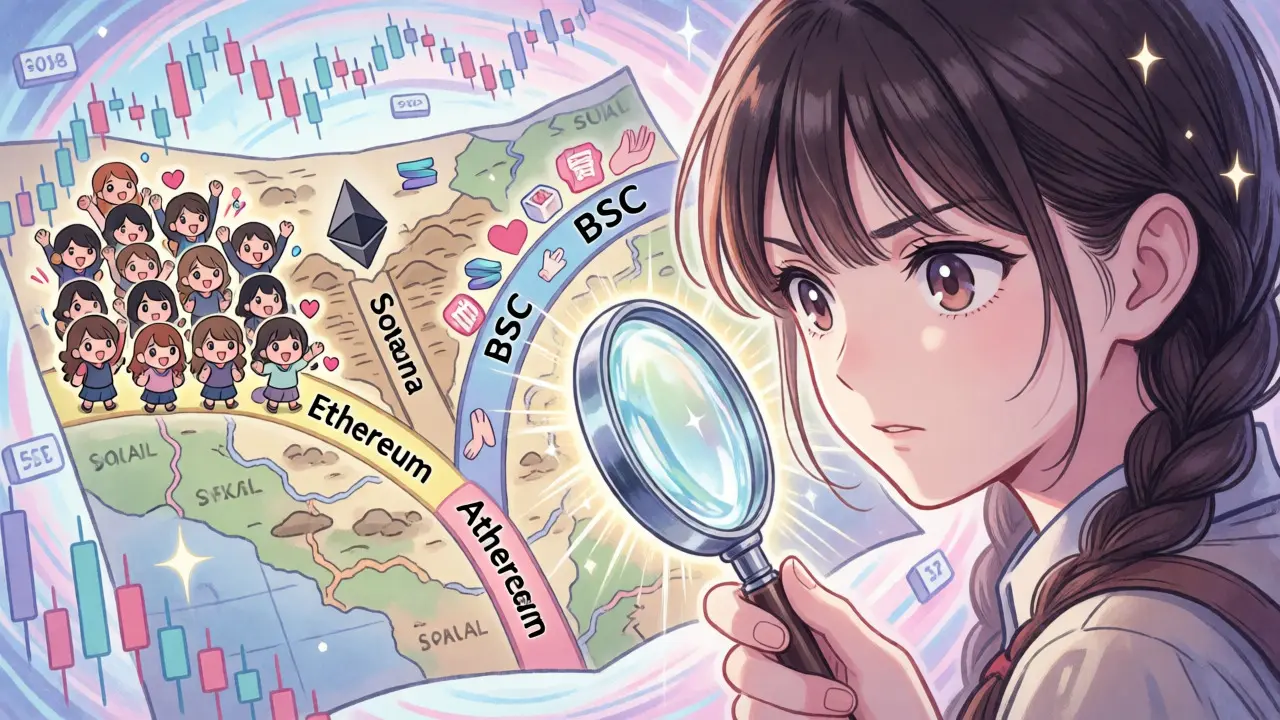
The biggest mistake new investors make is assuming all tokens named "Harold" are the same asset. They aren’t. In the crypto world, tickers like HAROLD are not exclusive. Multiple projects can use the same symbol if they launch on different blockchains or at different times. As of late 2026, three distinct entities dominate the search results for "Harold crypto," each with unique mechanics, risks, and goals.
- Solana Harold: A pure memecoin leveraging the viral "Hide the Pain" image for community engagement.
- Ethereum Harold: An older, governance-focused utility token launched in 2021.
- Binance Smart Chain (BSC) Harold: A deflationary DeFi token with built-in charity mechanics.
Why does this matter? Because buying the wrong one means you might end up holding a dead governance token when you wanted a speculative meme play, or vice versa. The market cap for the Solana version sits around $1.35 million, while the Ethereum variant hovers near $60,000. These are vastly different risk profiles.
Solana Harold: The Meme Coin Powerhouse
The most active and widely recognized version of Harold lives on the Solana network. Launched around November 2024, this token leans heavily into humor. It doesn’t promise complex DeFi yields or revolutionary tech. Instead, it sells a vibe: turning awkward life moments into a shared joke. The project markets itself as a "lighthearted and engaged community" driven by the meme’s popularity.
Technically, Solana Harold is an SPL token (Solana Program Library standard). It boasts a maximum supply of 1,000,000,000 HAROLD. By mid-2026, nearly all of these tokens were in circulation, meaning the inflation pressure is largely gone. Traders swap for HAROLD using decentralized exchanges like Raydium, typically pairing it against SOL or wrapped SOL (WSOL).
Liquidity remains its Achilles' heel. While some aggregators report daily volumes in the hundreds of dollars, others show spikes above $30,000 during hype cycles. This volatility is typical for microcap memecoins. If you plan to trade large amounts, expect significant slippage-the difference between the expected price and the executed price-because the order books are thin.
Ethereum Harold: The Forgotten Governance Token
If you dig deeper into historical data, you’ll find a completely different Harold on Ethereum. Launched back in 2021 by an anonymous team, this ERC-20 token wasn’t designed as a joke. It positioned itself as a governance and utility token. The idea was to let holders vote on ecosystem initiatives, participate in staking, and use HAROLD for NFT transactions.
However, the narrative never quite took off. With a total supply of approximately 986,009,157 HAROLD, this token trades at fractions of a cent-often below $0.0001. Its market capitalization is tiny, often ranking outside the top 5,000 coins on major trackers like CoinGecko. Unlike the Solana version, which thrives on social media buzz, the Ethereum Harold relies on legacy utility claims that haven’t translated into massive adoption. It’s listed on centralized exchanges like Bybit, but trading volume is sparse, rarely exceeding $500 a day. This makes it a highly illiquid asset; selling a meaningful position could crash the price temporarily.

BSC Harold: Charity Meets Deflation
The third player enters the arena on Binance Smart Chain. This version, often referred to as "Harold Coin," distinguishes itself with a specific economic model: deflationary mechanics combined with charity. Every transaction triggers a tax, part of which goes to a "charity wallet" selected by the community, and part of which is burned or redistributed to holders.
Launched later than its Ethereum counterpart, around late 2025, this BSC token uses the BEP-20 standard. You can trade it on PancakeSwap. The appeal here is moral: you’re not just speculating on a meme; you’re theoretically supporting a cause. However, transparency varies. While the smart contract is public on BscScan, verifying exactly where the donated funds go requires trusting the community’s voting mechanism. For many investors, the "fair launch" claim is attractive, but without audited code or verified team identities, it remains a high-risk venture.
Comparing the Three Variants
To help you decide which Harold fits your portfolio, look at the key differences in their structure and purpose. The table below breaks down the essential attributes of each token.
| Feature | Solana Harold | Ethereum Harold | BSC Harold Coin |
|---|---|---|---|
| Primary Use Case | Meme speculation & Community | Governance & Utility | Deflationary DeFi & Charity |
| Blockchain | Solana (SPL) | Ethereum (ERC-20) | Binance Smart Chain (BEP-20) |
| Max Supply | 1,000,000,000 | ~986,009,157 | Varies (Deflationary) |
| Launch Era | Late 2024 | 2021 | Late 2025 |
| Main Exchange/DEX | Raydium | Bybit (CEX) | PancakeSwap |
| Risk Level | High (Volatility) | Very High (Illiquidity) | High (Smart Contract Risk) |
How to Buy Harold Crypto Safely
Since these tokens live on different chains, the buying process changes depending on which Harold you want. Here is a quick checklist to avoid common pitfalls.
- Identify the Chain: Decide if you want the meme coin (Solana), the governance token (Ethereum), or the charity coin (BSC).
- Get the Right Wallet:
- For Solana: Use Phantom or Solflare.
- For Ethereum/BSC: Use MetaMask or Trust Wallet.
- Fund Your Wallet: Buy SOL for the Solana version, ETH for Ethereum, or BNB for BSC.
- Verify the Contract Address: This is critical. Copy the contract address from a trusted source like CoinMarketCap or the project’s official Twitter. Paste it into your DEX to ensure you’re swapping for the correct token.
- Execute the Swap: Go to Raydium (Solana), Uniswap (Ethereum), or PancakeSwap (BSC) and complete the trade.
Risks and Reality Check
Let’s be real: none of these Harold tokens are blue-chip investments. They are microcap assets with market caps ranging from tens of thousands to low millions of dollars. This size means they are susceptible to manipulation. A single whale selling off can drop the price by 20% in minutes.
Furthermore, the teams behind these projects are largely anonymous. There are no major audits highlighted in public records for the Solana or BSC versions, and the Ethereum token’s activity has slowed significantly since its 2021 peak. If you invest, treat it as speculative entertainment money, not savings. Do not expect dividends or guaranteed returns.
Frequently Asked Questions
Is there only one Harold cryptocurrency?
No. There are at least three distinct tokens using the ticker HAROLD. The most popular is a memecoin on Solana, but there is also an older governance token on Ethereum and a charity-focused DeFi token on Binance Smart Chain. Always check the blockchain and contract address before buying.
Who is the person behind the Hide the Pain Harold meme?
The face of the meme is András Arató, a retired electrical engineer from Hungary. He became famous after his stock photo expressions were used in countless memes worldwide. The crypto tokens capitalize on this recognition but are not officially endorsed by Arató himself.
Where can I buy Solana-based Harold?
You can buy Solana-based Harold primarily on decentralized exchanges like Raydium. You will need a Solana wallet such as Phantom or Solflare and some SOL to pay for gas fees and to swap for the token.
Is Harold crypto a good investment?
It depends on your risk tolerance. As a memecoin or microcap token, Harold is highly volatile and speculative. It lacks the robust fundamentals of larger cryptocurrencies. It may offer high percentage gains during meme trends, but it carries a significant risk of losing value due to low liquidity and lack of institutional support.
Does the BSC Harold token actually donate to charity?
The project claims to allocate 1% of every transaction to a charity wallet chosen by the community. However, because the team is anonymous and the project is small, independent verification of these donations can be difficult. Investors should review the smart contract on BscScan to see the flow of funds.