
What is PlutoChain (PLUTO) Crypto Coin? A Realistic Look at Bitcoin's New Layer-2 Experiment
 Dec, 14 2025
PlutoChain Investment Risk Calculator
Investment Results
With an investment of $100.00:
You would own 9,523.81 PLUTO tokens
At your target price of $0.05:
Your investment would be worth $476.19
Risk Assessment
Based on article data:
- 92.7% of holders are retail traders
- Only $12,450 daily trading volume
- 15% chance of survival past 2027 (Messari)
PlutoChain (PLUTO) isn’t another meme coin. It’s not even a typical altcoin trying to outperform Ethereum. It’s a bold, controversial attempt to give Bitcoin the power of smart contracts - without touching Bitcoin’s core code. Launched in early 2024, PlutoChain claims it can turn Bitcoin into a full-blown blockchain platform, handling DeFi, NFTs, and fast payments, all while keeping Bitcoin’s security intact. But here’s the catch: it’s built on Ethereum. And it’s barely trading.
How PlutoChain Claims to Work
PlutoChain operates as a Layer-2 solution for Bitcoin. That means it doesn’t change Bitcoin itself. Instead, it sits on top of it, using Bitcoin as a security anchor. Think of it like a high-speed express lane built next to a slow, crowded highway. Bitcoin handles the final settlement - the ultimate proof of ownership - while PlutoChain processes thousands of transactions in the background.
The technical setup is unusual. PlutoChain combines state channels, sidechains, and Optimism’s OP Stack rollups. This hybrid approach lets it process transactions in about 2 seconds, compared to Bitcoin’s 10-minute blocks. Fees are cut by roughly 95%. That’s impressive on paper. But here’s the twist: PlutoChain runs as an ERC-20 token on Ethereum. Its contract address is on the Ethereum blockchain. So while it promises Bitcoin security, its token and network operations rely on Ethereum’s infrastructure.
That creates a paradox. If Ethereum goes down, PlutoChain can’t settle transactions. If Ethereum’s gas fees spike, PLUTO token transactions become expensive. Critics call this a single point of failure. Supporters argue it’s the only practical way to bring Ethereum’s $54.7 billion DeFi ecosystem to Bitcoin without rewriting Bitcoin’s code.
PLUTO Token: Utility or Speculation?
The PLUTO token is the lifeblood of the network. It’s used to pay for transaction fees, vote on protocol upgrades, and access certain features. Total supply is fixed at 300 million tokens. No more can be created. That sounds solid - until you look at the numbers.
As of December 10, 2025, the PLUTO token trades at $0.0105. That’s down 87% from its April 2025 peak of $0.0788. Its fully diluted valuation is $3.15 million. But Coinbase reports zero circulating market cap. Why? Because almost no one is trading it. The 24-hour trading volume averages just $12,450. That’s less than what a single Ethereum whale might spend on one trade.
It’s listed only on decentralized exchanges like Uniswap V3. No major centralized exchanges like Binance or Coinbase list it. That means you can’t just buy it with a credit card. You need to already have ETH, swap it for PLUTO on Uniswap, and then connect your wallet to PlutoChain’s network. The process takes 15-20 minutes for most users. And even then, you’re dealing with a token that has almost no liquidity.
Who’s Using PlutoChain?
Not many people. According to Chainalysis data, 92.7% of PLUTO holders are retail traders looking for quick gains. Not developers. Not institutions. Not businesses. Just speculators.
On Reddit, comments like “PLUTO has no real-world adoption yet the marketing promises everything - classic red flag” are common. On Twitter, there were only 1,247 social mentions of PLUTO in the last 30 days. Compare that to Bitcoin’s 1.2 million or Ethereum’s 487,000. The community is tiny, quiet, and skeptical.
Developer activity is modest. The GitHub repo has 12 contributors and 87 commits in the last 30 days. That’s not dead, but it’s far from the pace of projects like Bitcoin Core or Ethereum. There are 147 open issues on their GitHub tracker - many about transaction delays and DeFi protocol incompatibilities. If you’re a developer trying to build on PlutoChain, you’re likely to hit roadblocks.
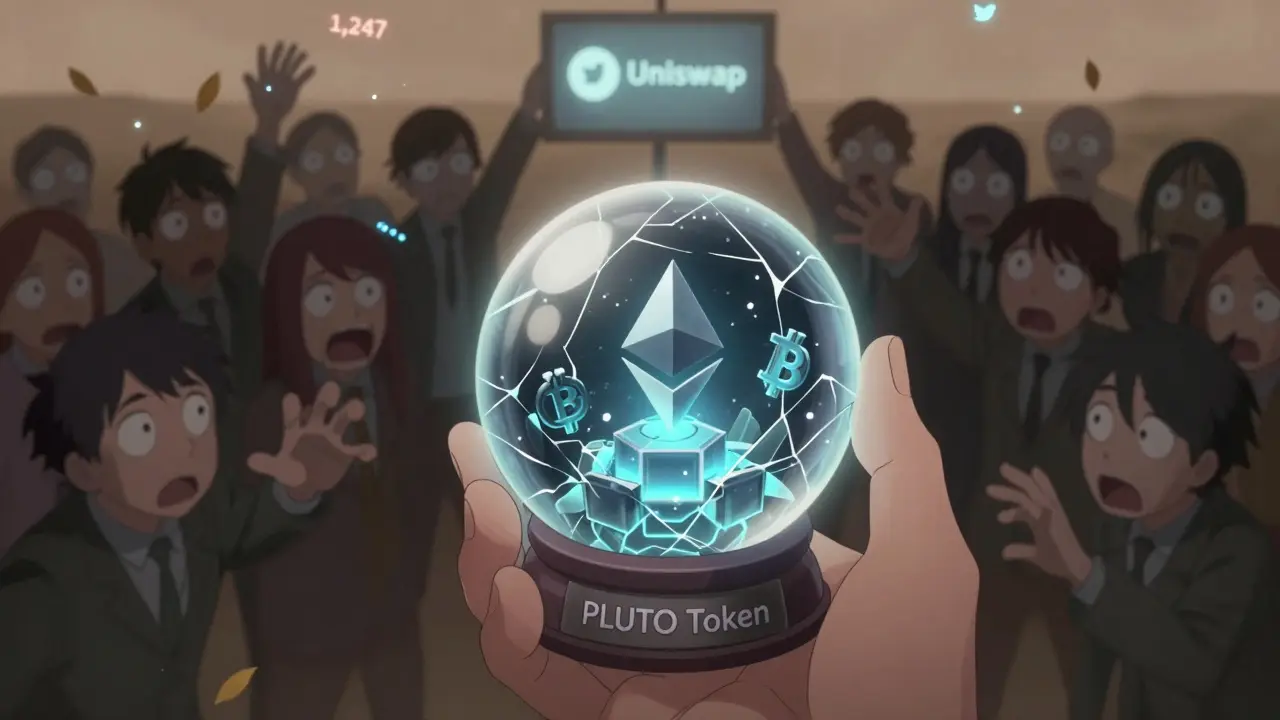
Security and Audits: A Mixed Picture
PlutoChain’s team claims to have been audited by SolidProof, QuillAudits, and Assure DeFi. All three reports from early 2025 say there are no high or medium severity vulnerabilities. Ownership of the smart contract has been renounced. The team can’t mint more tokens. Fees are capped at 25%. That’s good. It means the project can’t rug pull in the traditional sense.
But audits don’t fix bad design. QuillAudits confirmed the contract is secure - but didn’t validate whether the entire architecture makes sense. Critics point out that calling PlutoChain a “Layer 4-5” solution is misleading. The blockchain industry doesn’t recognize those layers. That’s marketing, not engineering. It’s a red flag for anyone who takes technical claims seriously.
How It Compares to Other Bitcoin Layer-2s
PlutoChain isn’t alone. There are at least 17 Bitcoin Layer-2 projects trying to do similar things. The two big ones are Lightning Network and Stacks.
- Lightning Network is focused on fast, cheap payments. It’s used by businesses and individuals. It processes over $4.2 billion in annual volume. It’s simple, proven, and doesn’t do smart contracts.
- Stacks brings smart contracts to Bitcoin using its own consensus mechanism. It’s more complex than Lightning but doesn’t rely on Ethereum. It’s ranked #287 by market cap.
- PlutoChain tries to do both - fast payments and Ethereum-style DeFi - but depends on Ethereum to function. It’s ranked #39,478. That’s not a typo.
PlutoChain’s biggest advantage is EVM compatibility. If you’ve built a DeFi app on Ethereum, you can drop it onto PlutoChain with almost no changes. That’s powerful. But if no one’s using Ethereum DeFi apps on PlutoChain, that advantage means nothing.

Is PlutoChain a Good Investment?
If you’re looking for a long-term bet on Bitcoin’s evolution, PlutoChain is a risky gamble. It’s not a proven technology. It’s not widely adopted. Its token price is volatile and illiquid. The market is dominated by speculators, not users.
Analysts at Messari give it only a 15% chance of surviving past 2027. BTCC’s team is more optimistic at 45%, but even they admit adoption hurdles are massive. CoinDesk predicts that by 2027, at least 60% of Bitcoin Layer-2 projects will fail - not because they’re hacked, but because no one uses them.
PlutoChain’s survival depends on one thing: critical mass. If thousands of developers start building on it. If major DeFi protocols integrate with it. If institutional money flows in. Right now, none of that is happening.
Bottom Line: A High-Risk Experiment
PlutoChain is an interesting technical experiment. It’s trying to solve a real problem: Bitcoin’s lack of programmability. The idea of bringing Ethereum’s DeFi ecosystem to Bitcoin is compelling. But the execution is deeply flawed. Relying on Ethereum for security and settlement undermines its own premise. The tokenomics are broken. The community is tiny. The adoption is nonexistent.
If you’re a developer curious about cross-chain innovation, you might want to experiment with PlutoChain’s testnet. If you’re a trader chasing volatility, you might see a short-term opportunity. But if you’re looking for a serious investment in Bitcoin’s future, PlutoChain isn’t it. There are safer, more proven options.
PlutoChain could still succeed. But right now, it’s a spark in a dark room. No one’s sure if it’s a candle - or just a match that’s about to go out.
Abhishek Bansal
December 14, 2025 AT 18:53Anselmo Buffet
December 16, 2025 AT 07:10Kathleen Sudborough
December 16, 2025 AT 11:31amar zeid
December 17, 2025 AT 13:56Steven Ellis
December 18, 2025 AT 02:52Claire Zapanta
December 19, 2025 AT 09:46Kathy Wood
December 21, 2025 AT 04:18Lynne Kuper
December 22, 2025 AT 05:01Jessica Eacker
December 22, 2025 AT 13:34Andy Walton
December 24, 2025 AT 00:07Candace Murangi
December 25, 2025 AT 23:05Albert Chau
December 26, 2025 AT 23:25Madison Surface
December 27, 2025 AT 10:19Tiffany M
December 28, 2025 AT 15:12Eunice Chook
December 30, 2025 AT 14:21