
Which Crypto Exchanges Should Chinese Residents Avoid in 2026?
 Apr, 18 2026
If you are a resident of mainland China, the answer to which crypto exchanges you should avoid is simple: all of them. While many people try to find a "safe" loophole or a platform that doesn't check IDs strictly, the reality in 2026 is that any engagement with cryptocurrency trading is a high-stakes gamble with the law. Following the massive regulatory sweep by the People's Bank of China, the landscape hasn't just shifted-it has been completely cleared.
The Hard Line: Why Every Exchange is Off-Limits
For a long time, there was a gray area where some platforms operated in the shadows. That era is over. On May 30, 2025, the People's Bank of China (PBOC) issued a decree that turned the volume up to ten on restrictions. By June 1, 2025, every single cryptocurrency activity-trading, mining, and even just owning digital coins-became illegal for Chinese citizens.
This isn't just a suggestion or a set of guidelines. It is a comprehensive prohibition. The government has made it clear that financial institutions cannot open accounts or provide settlement services for anyone suspected of crypto trading. If you try to move money from a traditional bank account into a crypto platform, you aren't just risking a frozen account; you are flagging yourself to the authorities.
Specific Platforms That Pose the Highest Risk
You might think that using an overseas exchange protects you because the company isn't based in Shanghai or Beijing. Unfortunately, that's not how it works. The 2025 decree specifically targets overseas exchanges, banning them from serving Chinese residents regardless of where the server is located. Here are the types of platforms you must avoid:
- Global Giants: Platforms like Binance and Coinbase are explicitly prohibited. Even though they have massive global footprints, they cannot legally serve Chinese residents.
- Regional Favorites: Exchanges like OKX and Huobi (which has deep Chinese roots) are strictly off-limits.
- Niche and Altcoin Hubs: Kraken, KuCoin, Gate.io, and Bitfinex are all under the same ban.
- Decentralized Options: Even DEXs (Decentralized Exchanges) are risky. While they don't have a central office to shut down, the way you fund them-usually through a centralized bridge or bank transfer-leaves a digital trail that the Ministry of Public Security can track.
| Region | Legal Status | Regulatory Approach | Primary Goal |
|---|---|---|---|
| China | Illegal | Absolute Prohibition | Financial Control & Stability |
| USA | Legal (Regulated) | Compliance & Oversight | Consumer Protection |
| Singapore | Legal (Regulated) | Progressive Sandbox | Innovation Hub |
| El Salvador | Legal Tender | Full Adoption | Financial Inclusion |
How the Government Tracks Your Trades
If you're wondering, "How will they even know?", you should look at the current enforcement mechanisms. The Chinese government isn't just relying on companies to report users; they've built a coordinated monitoring system. This involves both online tracking and offline inspections of financial institutions.
The Ministry of Public Security now works closely with non-bank payment providers. If you use an app like Alipay or WeChat Pay, your transaction patterns are monitored for anything that looks like P2P (peer-to-peer) crypto trading. They look for "strange" transfers-large sums of money moving to unknown individuals without a clear commercial purpose. This is a classic red flag for OTC (Over-the-Counter) trading.
Once a link to virtual currency is found, the consequences are swift. Asset seizure and criminal prosecution are not just threats; they are the standard protocol under the June 2025 regulations. The government views these activities not as "investing," but as money laundering and financial instability.

The 16-Year Slide Toward Total Ban
This didn't happen overnight. China's relationship with crypto has been a slow-motion car crash for users. It started back in 2009 when the government first warned against using virtual currencies to buy real-world goods. By 2013, banks were told to stop helping people buy Bitcoin.
The real hammer dropped in 2017 and 2018, when ICOs (Initial Coin Offerings) were banned and miners were chased out of the country. Then came the environmental argument in 2021, where mining was banned to hit climate goals. The final nail was the June 2025 decree, which closed the last remaining gaps. This historical progression shows a clear intent: the state wants a total monopoly on digital currency.
The State-Approved Alternative: Digital Yuan
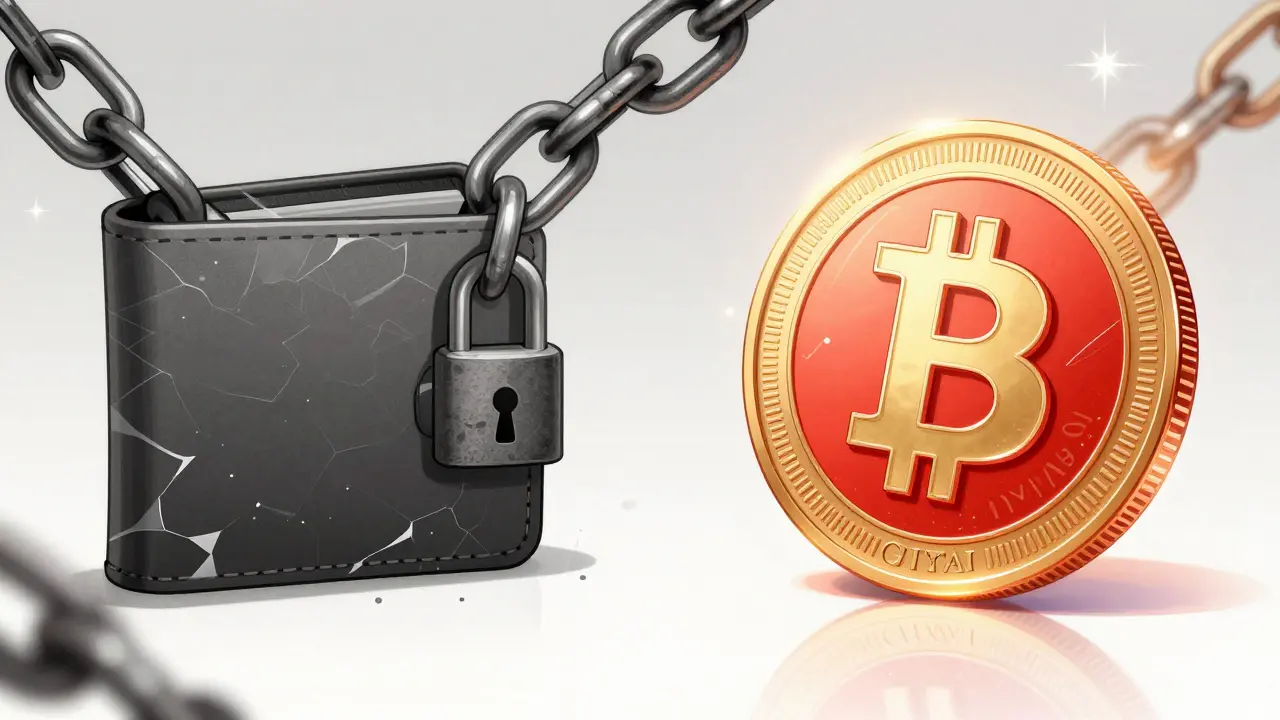
If you want the convenience of digital payments without the risk of jail time, the only legal path is the e-CNY, better known as the digital yuan. This is a Central Bank Digital Currency (CBDC) that looks and feels like a crypto wallet but is entirely controlled by the PBOC.
Unlike Bitcoin or Ethereum, the digital yuan doesn't offer decentralization or the potential for speculative gains. Its purpose is to increase the efficiency of the financial system and give the government a real-time view of every single transaction in the country. It is the "anti-crypto"-all the technology, none of the freedom.
What Happens if You Use a VPN?
Many people believe a VPN (Virtual Private Network) is a magic shield. While a VPN might hide your IP address from the exchange, it doesn't hide your money. To get funds into an exchange, you usually need to go through a bank or a payment processor. As mentioned, those institutions are now legally required to block and report crypto-related activity. No matter how you access the website, the movement of fiat currency is the point of failure.
Furthermore, internet companies in China are required to block crypto-related content and report users who attempt to bypass these filters. The digital enforcement mechanism is now so tight that the risk of a "leak" is incredibly high.
Is it legal to just hold Bitcoin in a private wallet in China?
No. Under the June 2025 decree, the individual ownership of digital currencies is considered illegal for Chinese citizens. While holding a private key on a piece of paper is hard to detect, any attempt to move those funds into a spendable or tradable form is a criminal offense.
Can I use a foreign passport to sign up for Binance or Coinbase?
If you are a Chinese resident, using a foreign passport doesn't change your legal status or residency. If the authorities track funds moving from a Chinese bank account to a foreign exchange, the identity used to sign up won't protect you from asset seizure or prosecution.
What are the penalties for trading crypto in China in 2026?
Penalties include the immediate seizure of all involved assets, heavy financial fines, and potential criminal prosecution. Because the government classifies these activities as threats to national financial security, the courts take a zero-tolerance approach.
Is the digital yuan the same as Bitcoin?
Absolutely not. Bitcoin is decentralized and not controlled by any government. The digital yuan (e-CNY) is a centralized tool issued by the People's Bank of China. It is a digital version of the national currency, and the government can track or freeze it at will.
Are P2P platforms safer than centralized exchanges?
No. In fact, they are often more dangerous. P2P trading involves sending money directly to another person. The PBOC monitors these types of transfers specifically to catch "shadow" crypto trading. Many users have had their bank accounts frozen simply because they received money from someone who was flagged for crypto activity.
Next Steps for Those Seeking Compliance
If you have assets currently sitting on an exchange, the safest move is to exit those positions and move into state-approved financial products. Continuing to use an exchange while residing in China is no longer a matter of "finding the right platform"-it is a matter of whether you can afford the legal consequences when the system catches up to you.
For those who absolutely cannot abandon cryptocurrency, the only legal alternative is to physically relocate to a jurisdiction with a permissive regulatory framework, such as Singapore or the UAE, and establish legal residency there before engaging with any trading platforms.
John and Lauren Busch
April 19, 2026 AT 17:15Basically just a fancy way of saying you're cooked if you're in China. 💀
Shantal Sanjur
April 20, 2026 AT 00:51Oh please, like they aren't already tracking every single breath we take with their "social credit" nonsense. This is just the latest chapter in the global surveillance state. They probably have a backdoor into every VPN you've ever tried to use anyway, so thinking you're "safe" is just adorable. It's all a game to keep the population in line while the elites move their own wealth into offshore holdings. Wake up people, the digital yuan is literally just a leash with a barcode on it!
Adedamola Oyebo
April 20, 2026 AT 01:14The risk is indeed extreme!!! Use hardware wallets only!!!
Joshua Salwen
April 20, 2026 AT 23:46Omg i cant even imagine the DRAMA of getting your bank account frozen just for holding a bit of BTC!! Like imagine the pure chaos when the gov knocks on your door over some pixels!! Totaly insane behavior by the PBOC honestly!
Abhinav Chaubey
April 22, 2026 AT 22:49Everyone acting surprised that a sovereign nation wants control over its own currency. It's basic economics. If you're too blind to see that, you deserve to lose your coins.
Kim Smith
April 24, 2026 AT 08:54It's kinda wild when you think about the philosophicall implications of a state-owned digital currency... like we're basically moving toward a world where the concept of private money is just a memory from the 20th century and every single transaction becomes a data point for an algorithm to judge your loyalty to the state, which is honestly just a terrifying prospect if you value any kind of autonomy over your own life and wealth, especially when you consider how quickly the rules can change overnight based on a single decree from some office in Beijing that decides your savings are now "national security threats" because you wanted to trade some altcoins in 2025.
Shannon Kelly Smith
April 25, 2026 AT 16:28Stay safe out there everyone! 🛡️ If you're feeling trapped, maybe look into those legal residency options mentioned. There are ways out if you plan ahead! ✈️🌟
Michelle Stanish
April 26, 2026 AT 10:16I think it's fine. People always exaggerate.
Jeff Barlett
April 27, 2026 AT 11:28Fine? Are you kidding me? This is a literal financial apocalypse for anyone in the region. I love how some people just brush off total government control as "fine." It's absolutely tragic and a complete joke that some still think they can "outsmart" the PBOC with a basic VPN.
Chintu Parikh
April 28, 2026 AT 15:41I believe we must remain optimistic that a balance between innovation and regulation can be achieved in the future. It is imperative that individuals prioritize their legal safety above all else during these volatile times.
Sandeep Bhoir
April 29, 2026 AT 02:42Sure, because the digital yuan is totally about "efficiency" and not about knowing exactly who bought a coffee at 3 AM. Real clever.
siddharth narula
April 30, 2026 AT 09:23One must ponder the moral decay inherent in chasing speculative gains while ignoring the stability of the collective state. The pursuit of decentralized wealth is often a veil for greed. 🙏
Kevin Lư
April 30, 2026 AT 14:56Honestly, just leave the coins. Trying to smuggle digital assets out of a country that hates them is just asking for trouble. I don't know why people keep trying to fight a losing battle.
Kaitlyn Wu
May 2, 2026 AT 07:51The advice about relocating to Singapore or the UAE is the only practical solution here. Don't try to be a hero by using a fake passport; it's not worth the risk of asset seizure.
Mike Kempenich
May 3, 2026 AT 02:28I'm sure there will be a way for people to regain their financial freedom eventually. Things always cycle back to freedom in the end.
Gillian Kent
May 4, 2026 AT 12:57it just seems so sad that people cant even hold their own money anymore... hope things get bettr for them soon
nikki krinkin
May 6, 2026 AT 04:56It's a heavy situation. I hope those who can get out do so safely.
Keri Pommerenk
May 7, 2026 AT 01:11completely agree with moving to a new residency if you want to keep trading its the only way to stay safe now
Mark Pfeifer
May 7, 2026 AT 05:08I wonder if the PBOC is actually monitoring the chain for specific wallet addresses linked to known residents or if they only care about the on-ramps. The logic of total prohibition is sound, but the execution usually has gaps.
Saurav Bhattarai
May 7, 2026 AT 20:00While China struggles with these restrictions, India is far more sophisticated in its approach to digital assets. We don't need these drastic measures because our system is naturally more robust. Truly pathetic to see such desperation for control.